
Radal boxes
Set of veneered boxes with inner trays
Santiago/2024
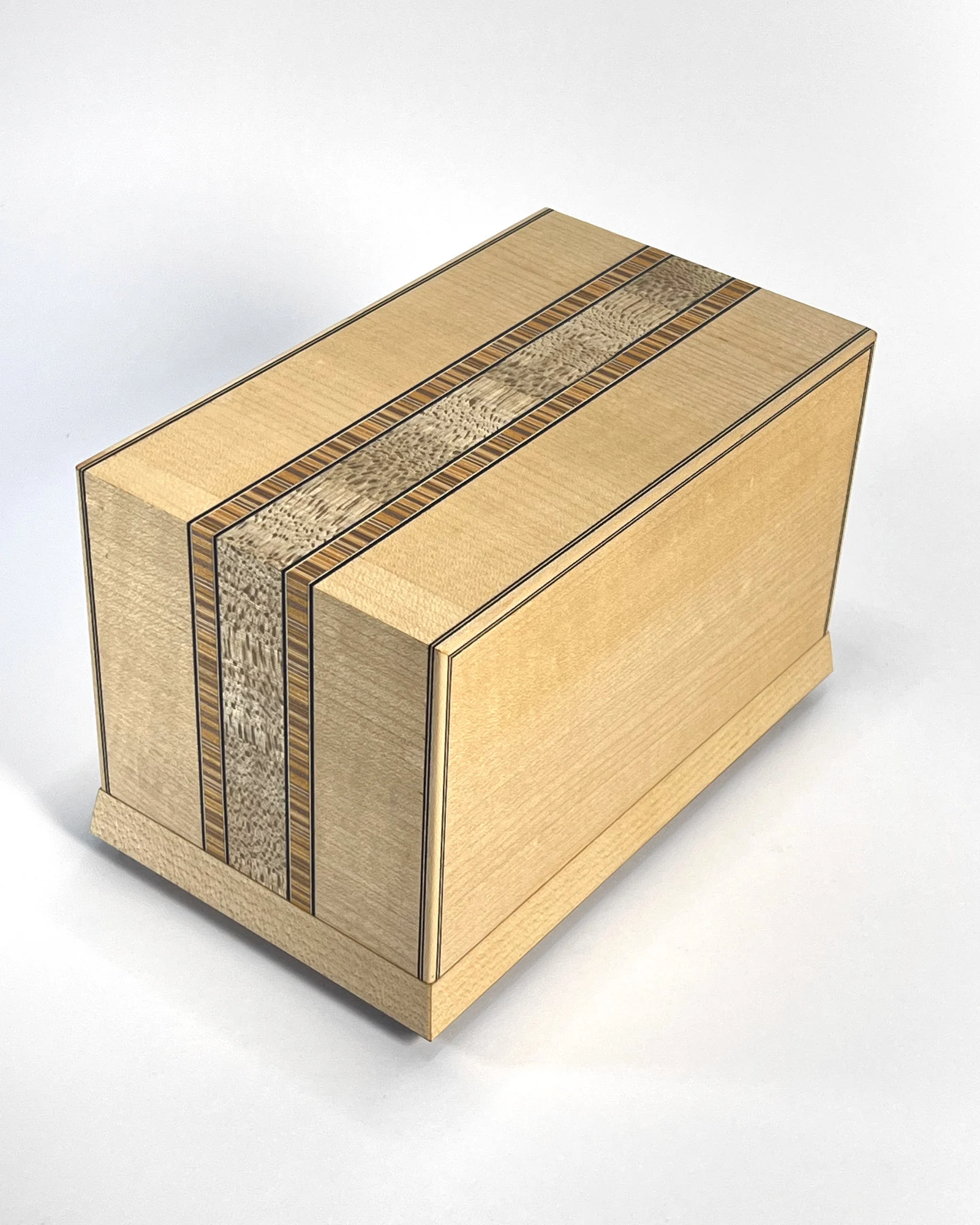
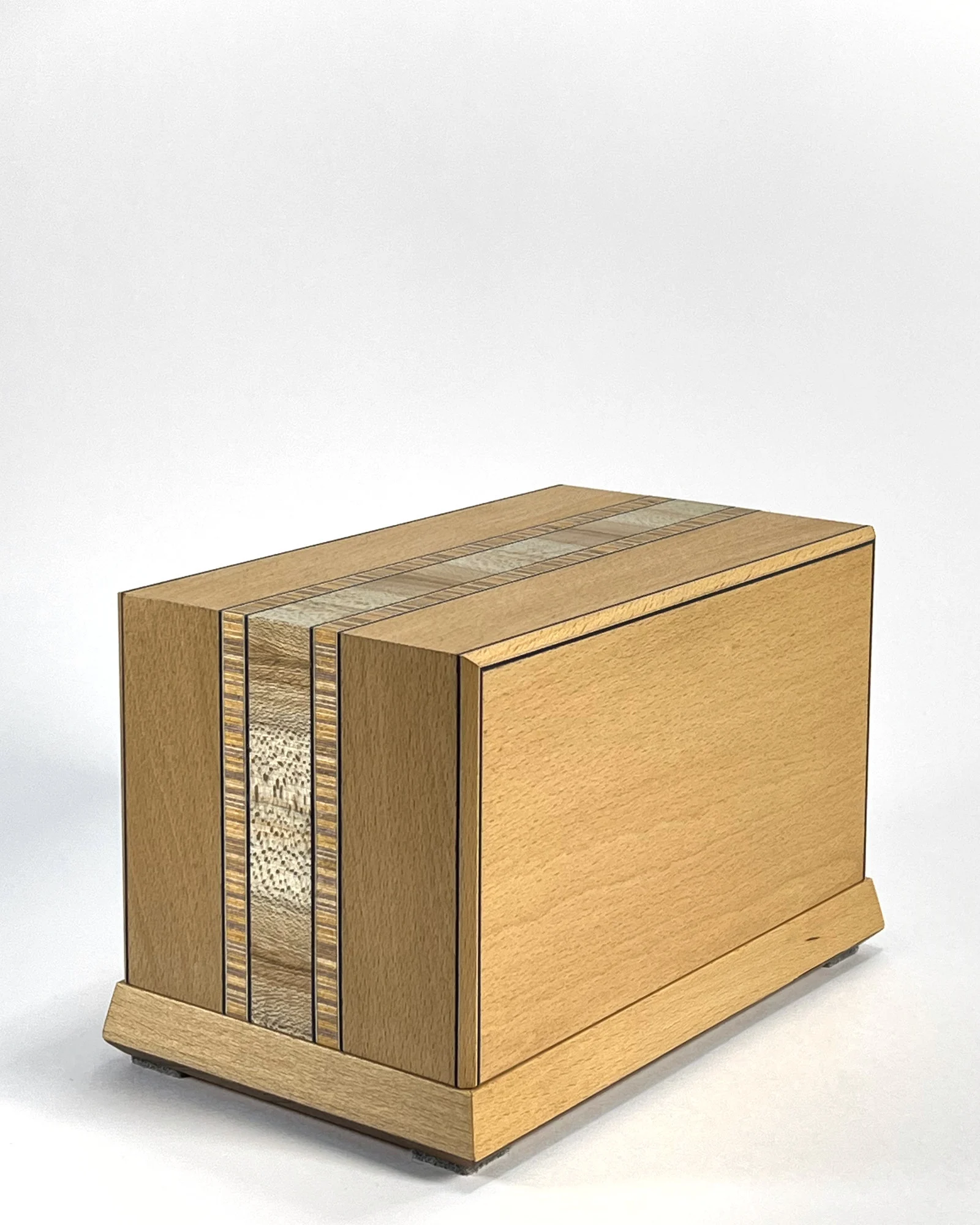
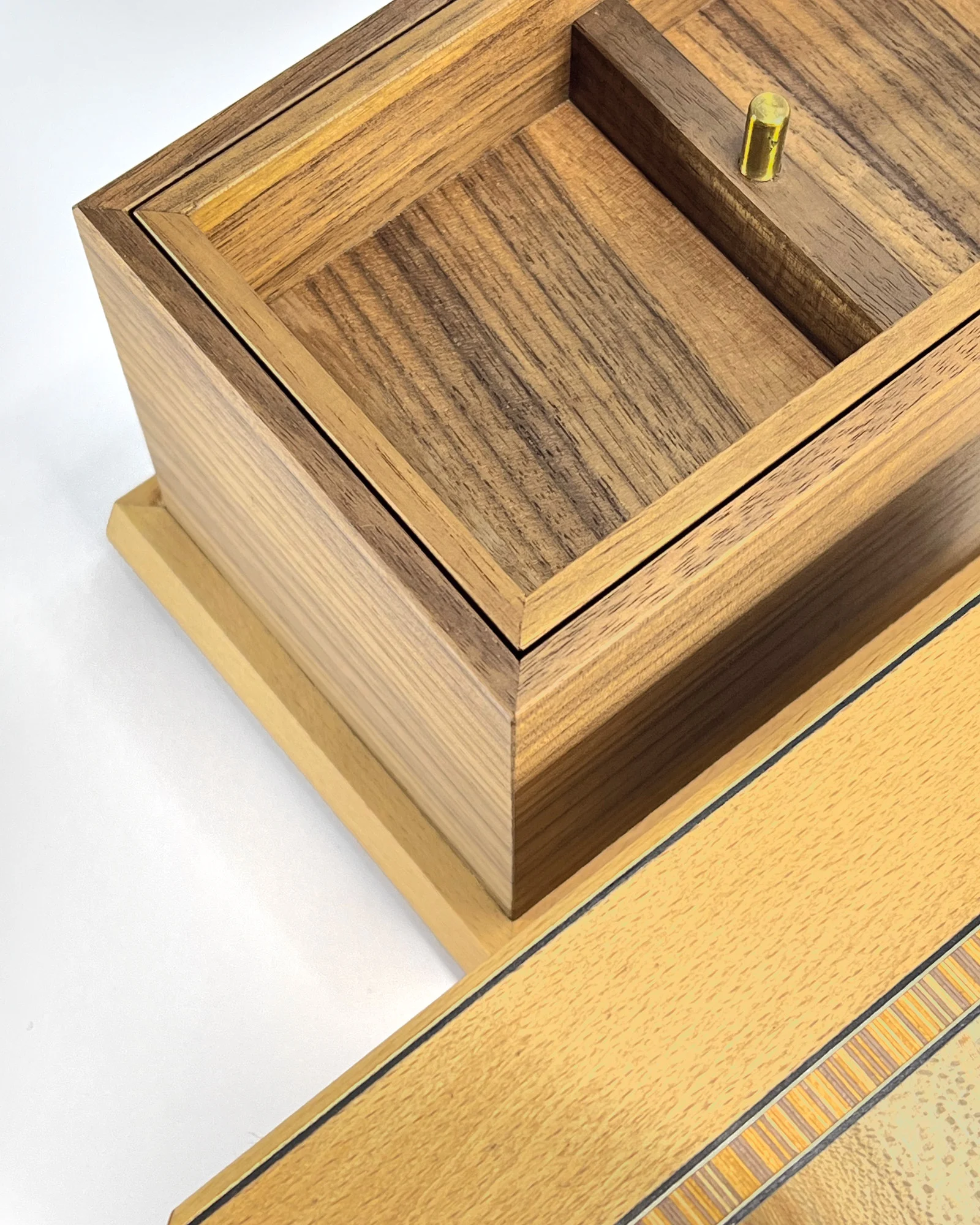
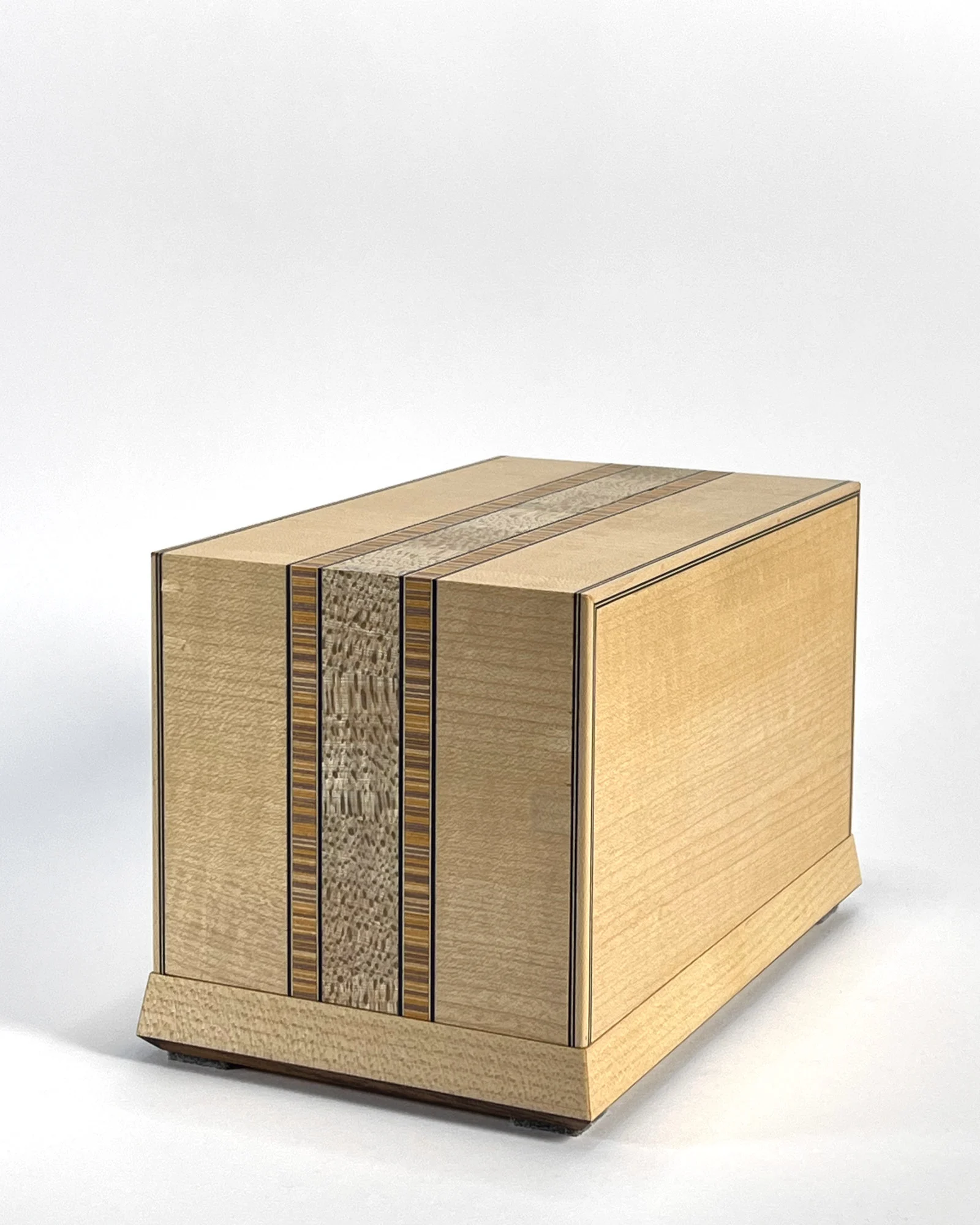
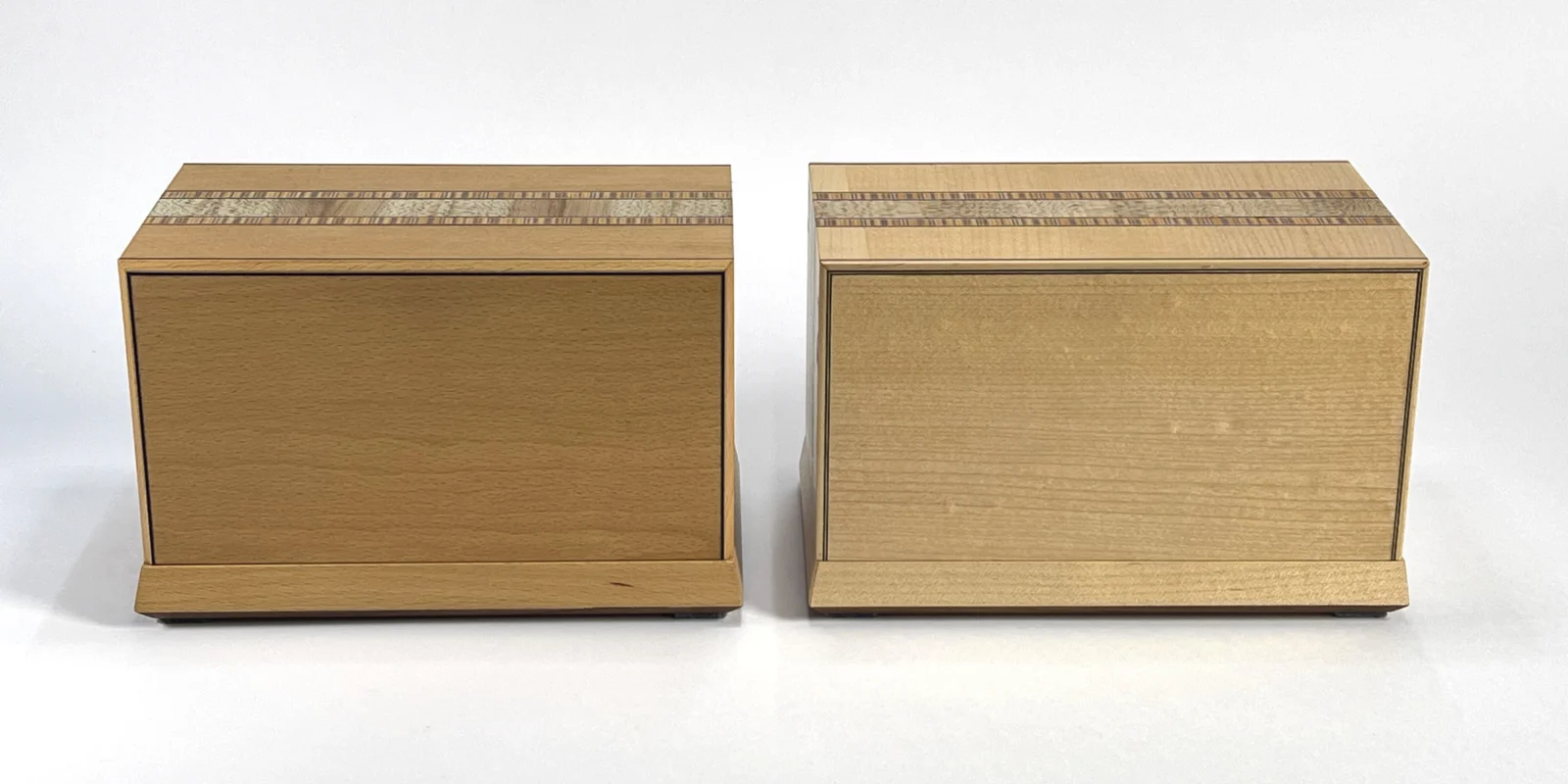
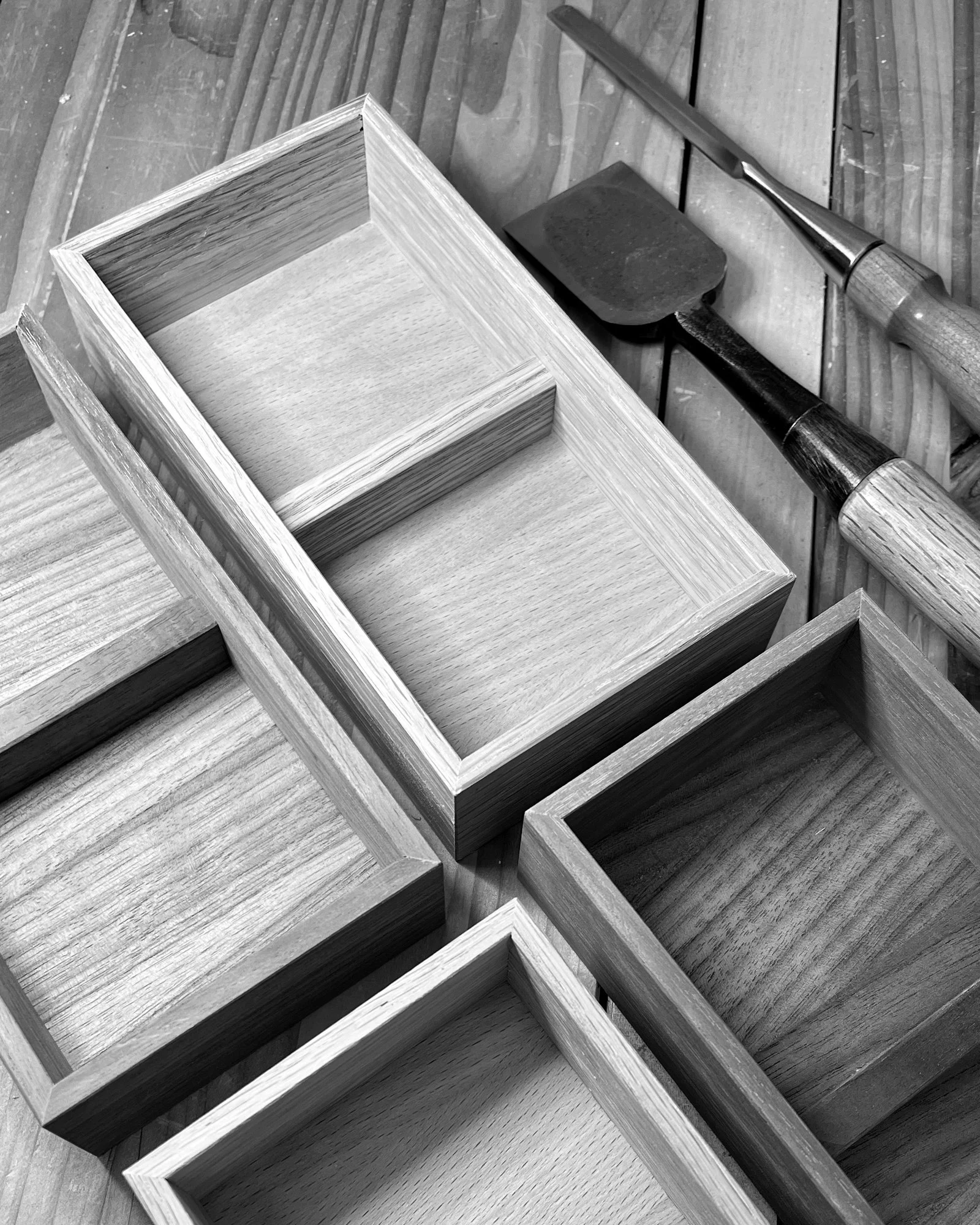
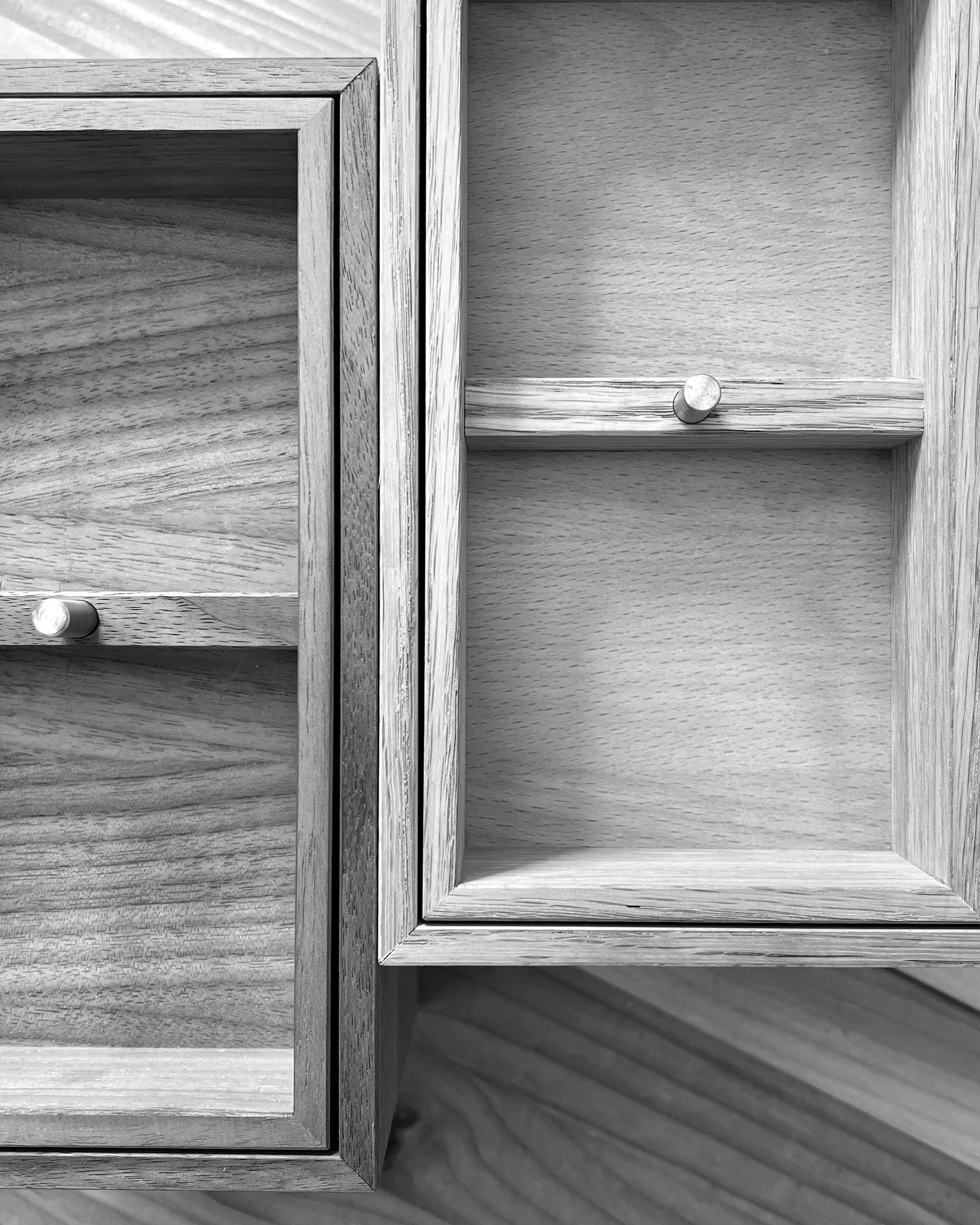
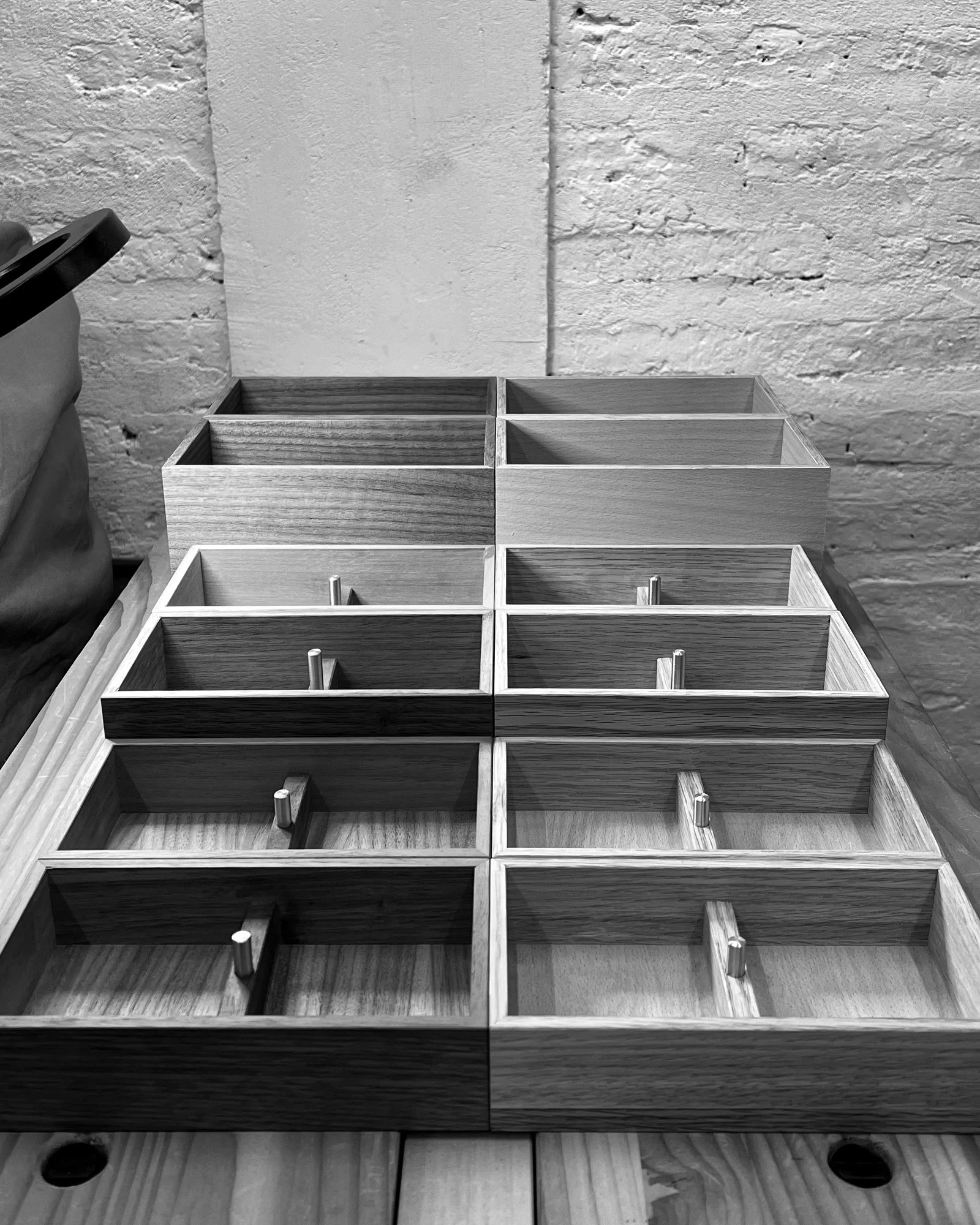
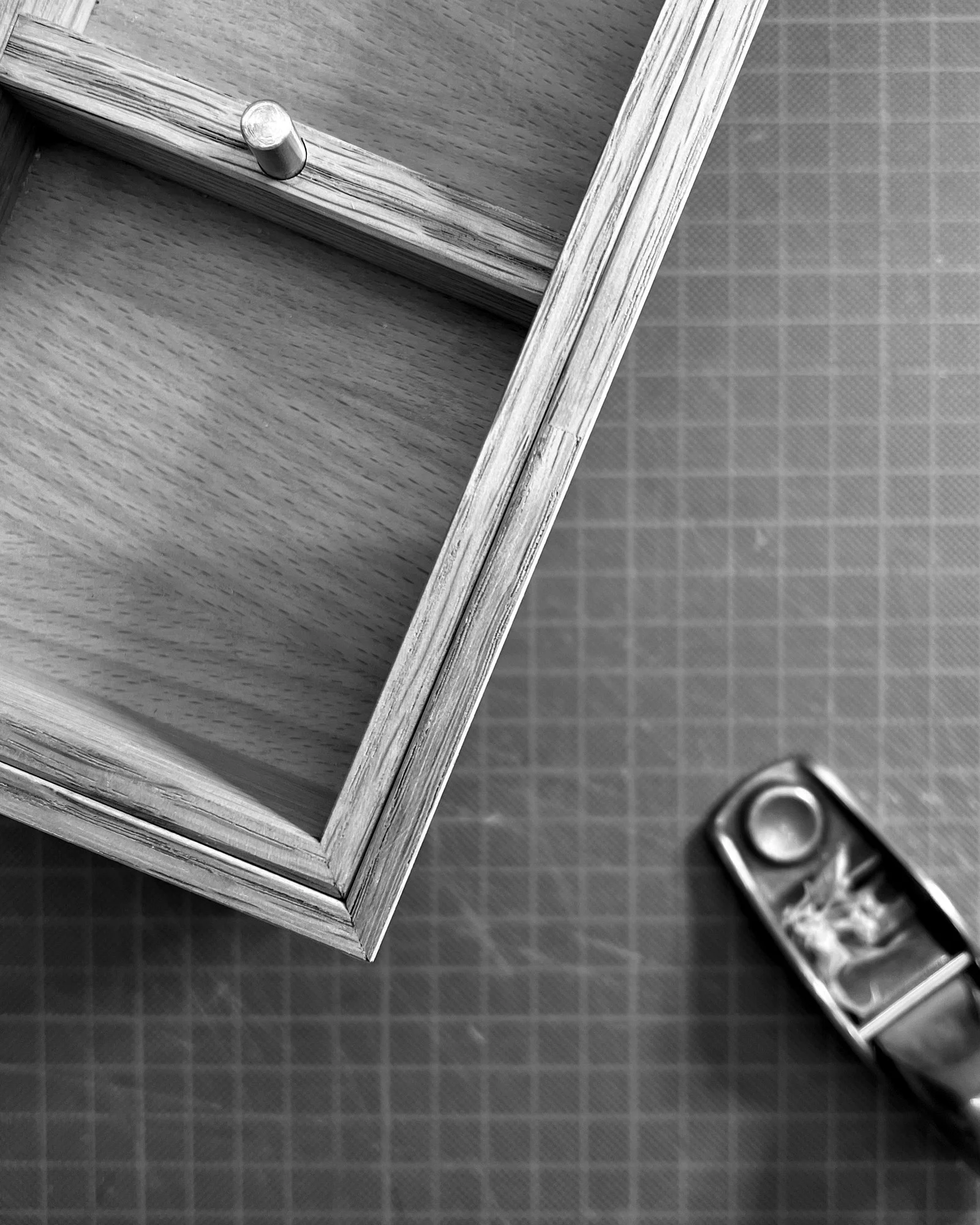
A set of veneered boxes with inner trays. Four were made: a pair in maple with American oak trays and another pair in beech with walnut trays. Each tray lifts out with a brass pin.
The outer boxes are veneered, with decorative marquetry by El Carpintero and a radal veneer made in the workshop, laid crosswise to the other veneers and marquetry. The edges combine reconstituted ebony and maple veneers for contrast, and a beech strip forms a bevel.
In the beech pair, the inside is mainly walnut, in solid wood and veneer. The base is a beech frame with a walnut bevel underneath, which gives the piece a floating look.
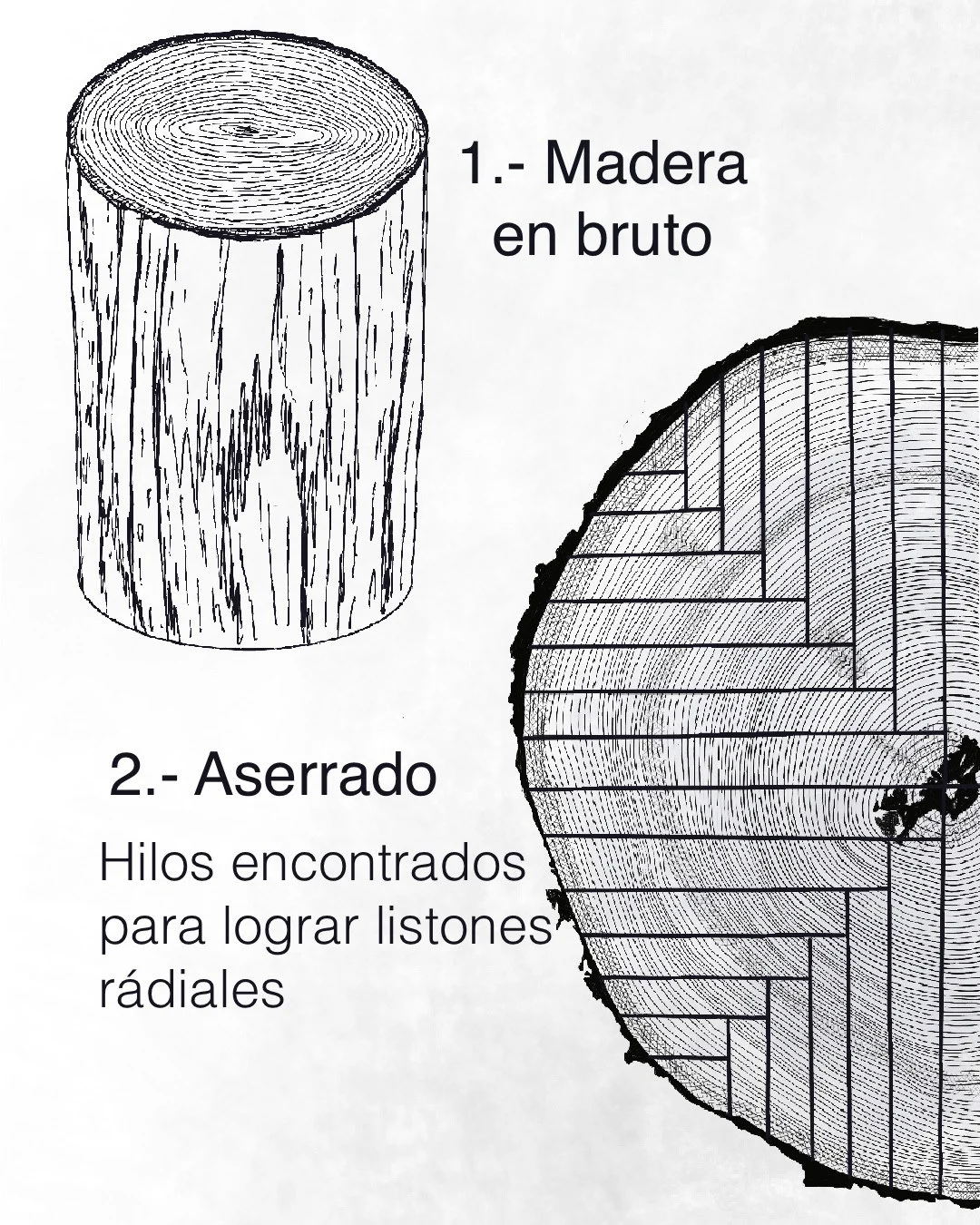
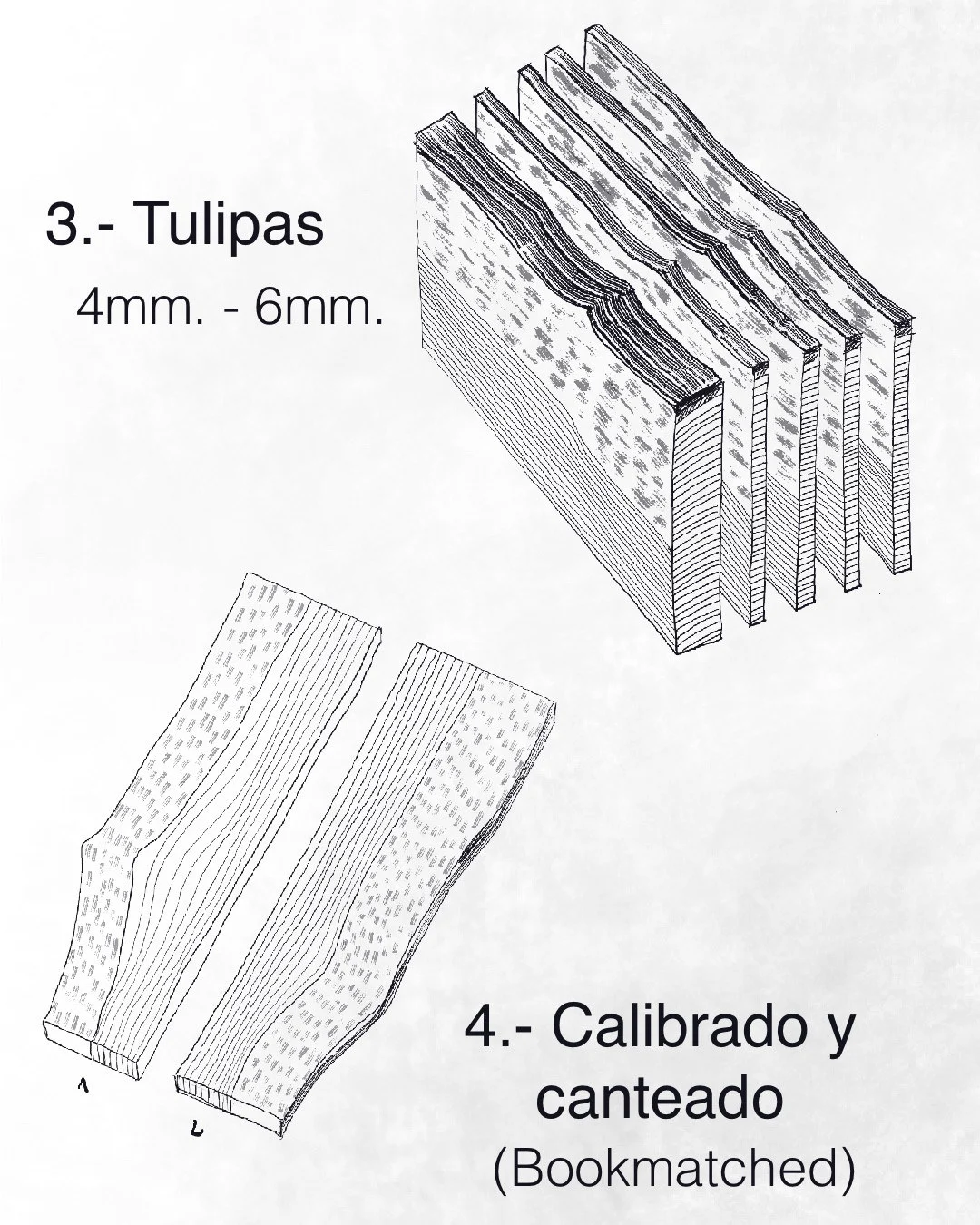
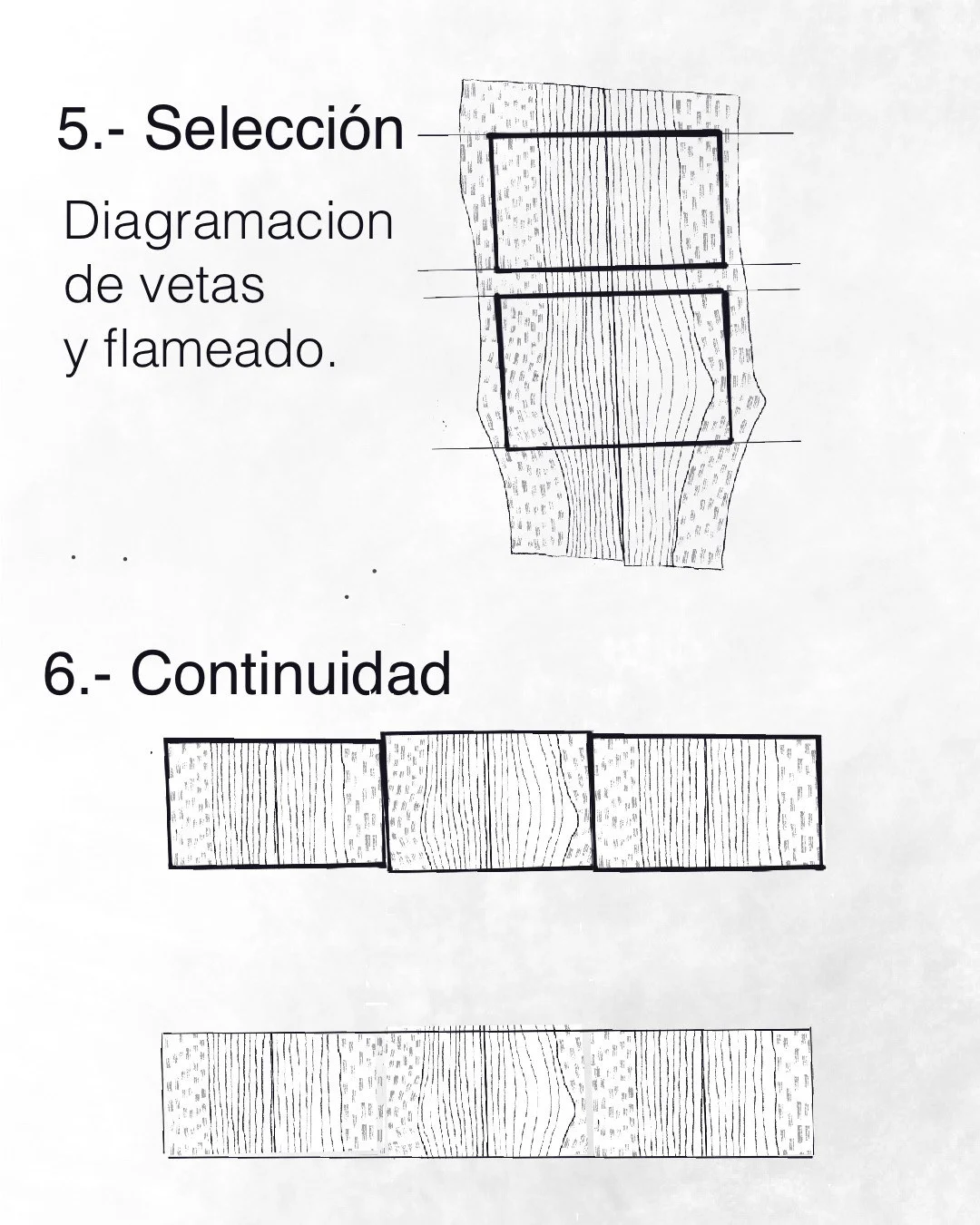
It was a process of a little over a year, which started with a radal log received as a gift. The log was sawn into quartersawn strips, as close to perpendicular to its surface as possible, to show its figure and some medullary rays. From those strips, leaves of veneer were cut, looking for the right grain and patterns, which do not appear in all of them. Finally, the consecutive leaves were brought to thickness and matched, so the pattern repeats without the joint between them showing.
Veneering and marquetry allow for options that would be a mistake in solid wood. Making your own veneers is one of them: it lets you make the most of a wood with distinctive character, like radal.
- Materials
- Radal (Lomatia hirsuta), beech, maple, reconstituted ebony and walnut · American oak and walnut trays · marquetry by El Carpintero · brass pins
- Technique
- Veneering and marquetry · radal veneer made in the workshop from the log, quartersawn · reconstituted ebony and maple edges, with a beech bevel · frame base with a walnut bevel
- Finish
- Osmo #3032 hardwax oil, satin
- Dimensions
- 200 × 100 × 100 mm (width × depth × height; each box)
- Edition
- Series of 4

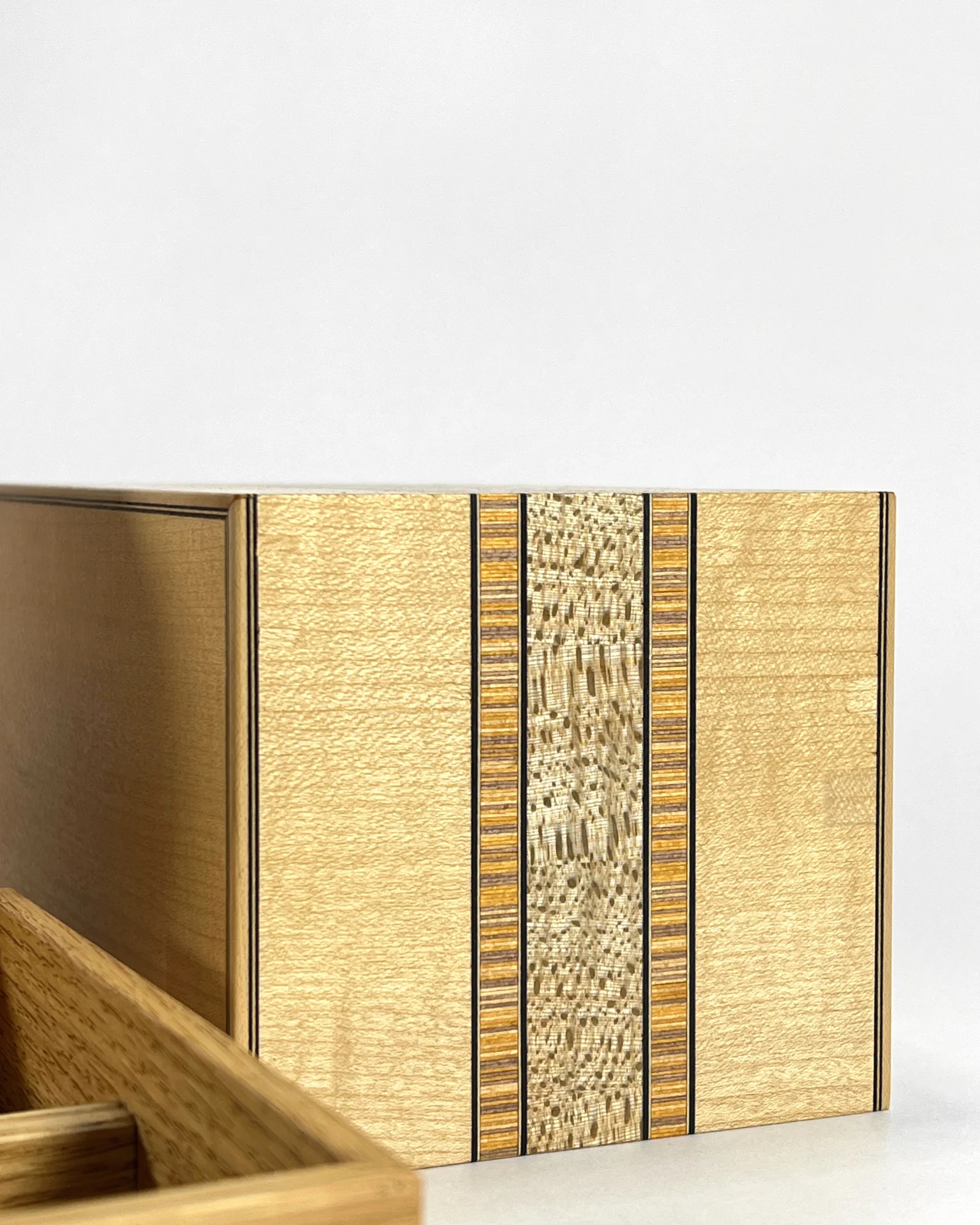

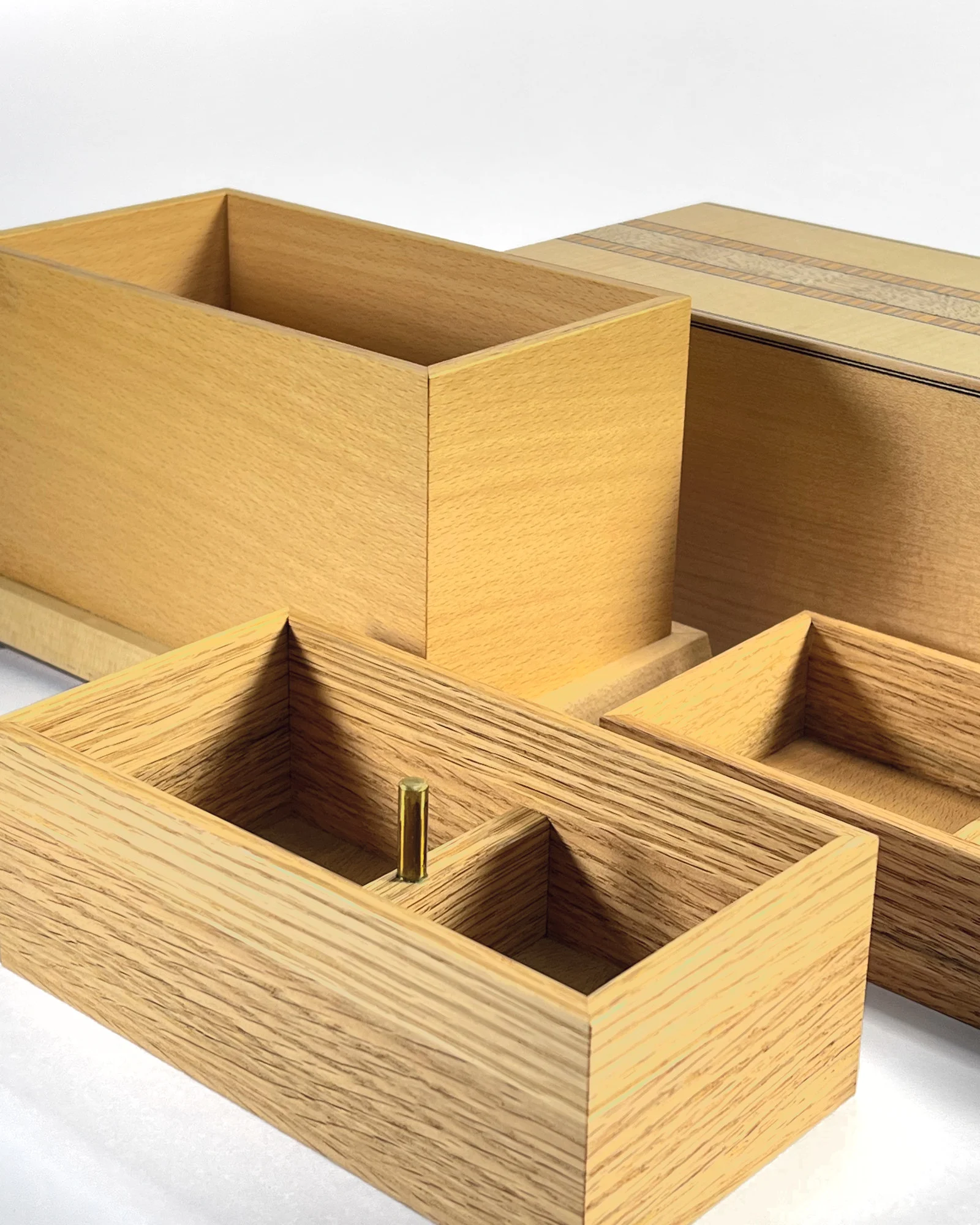
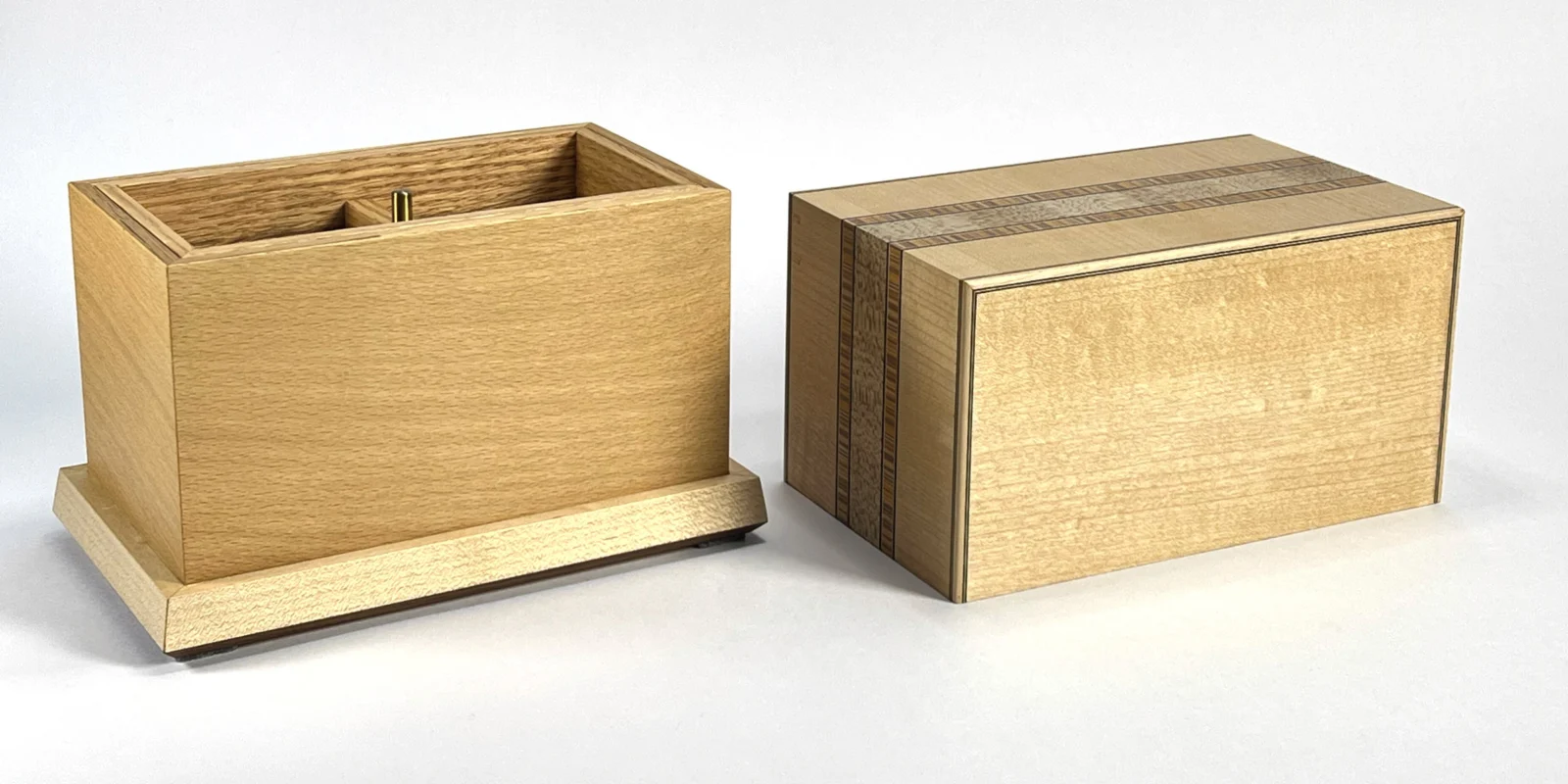

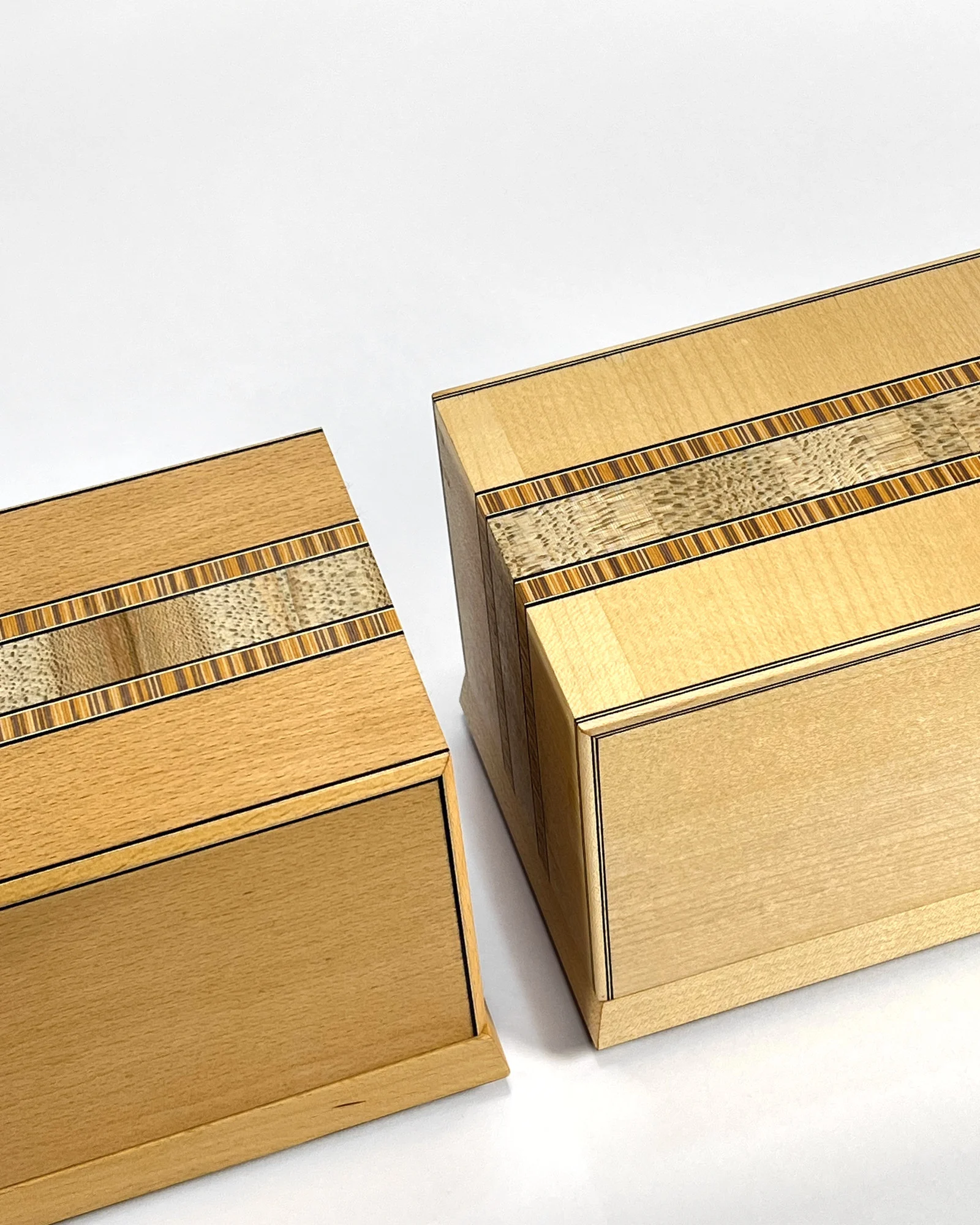




Finished piece · 0:47
Process
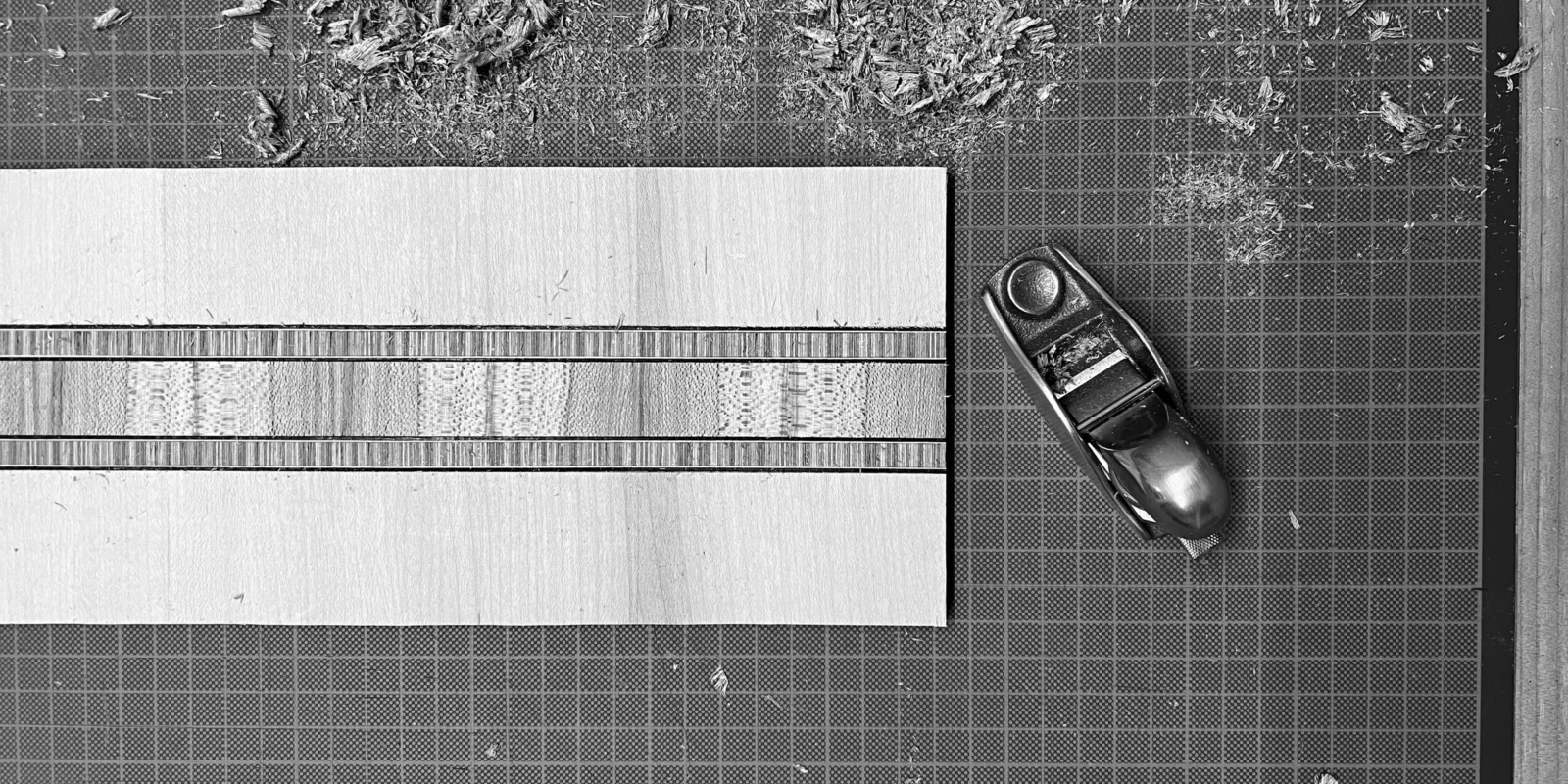
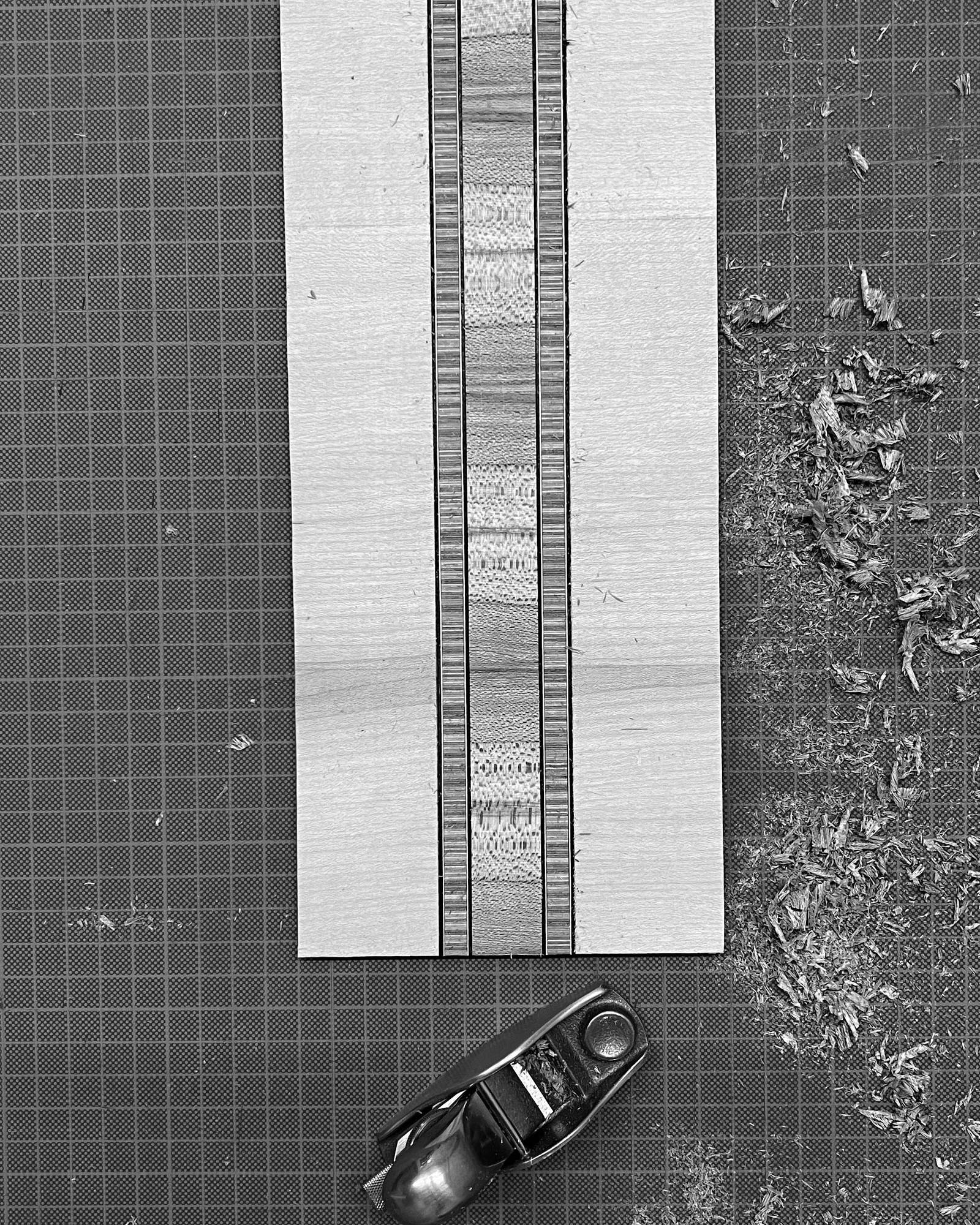
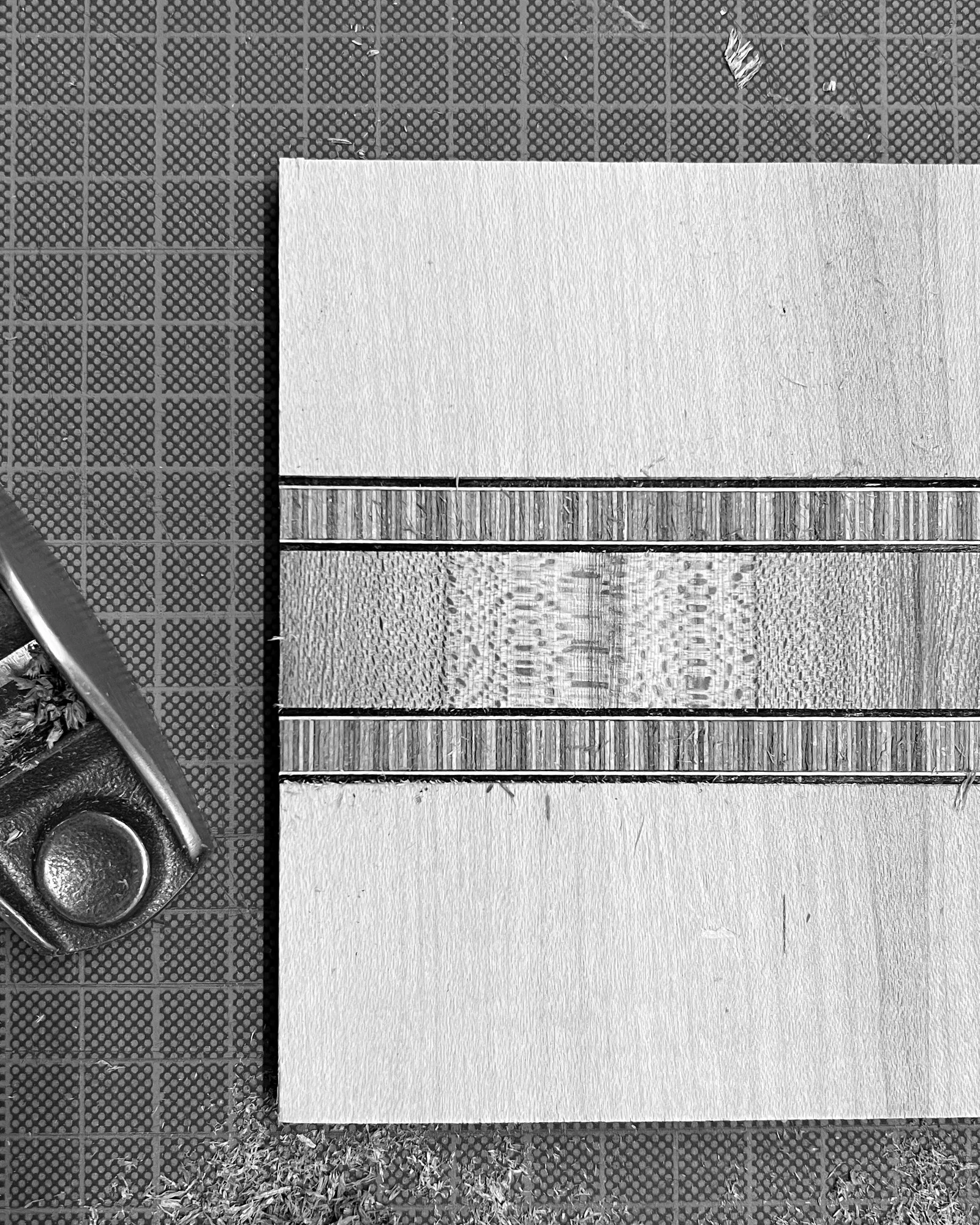
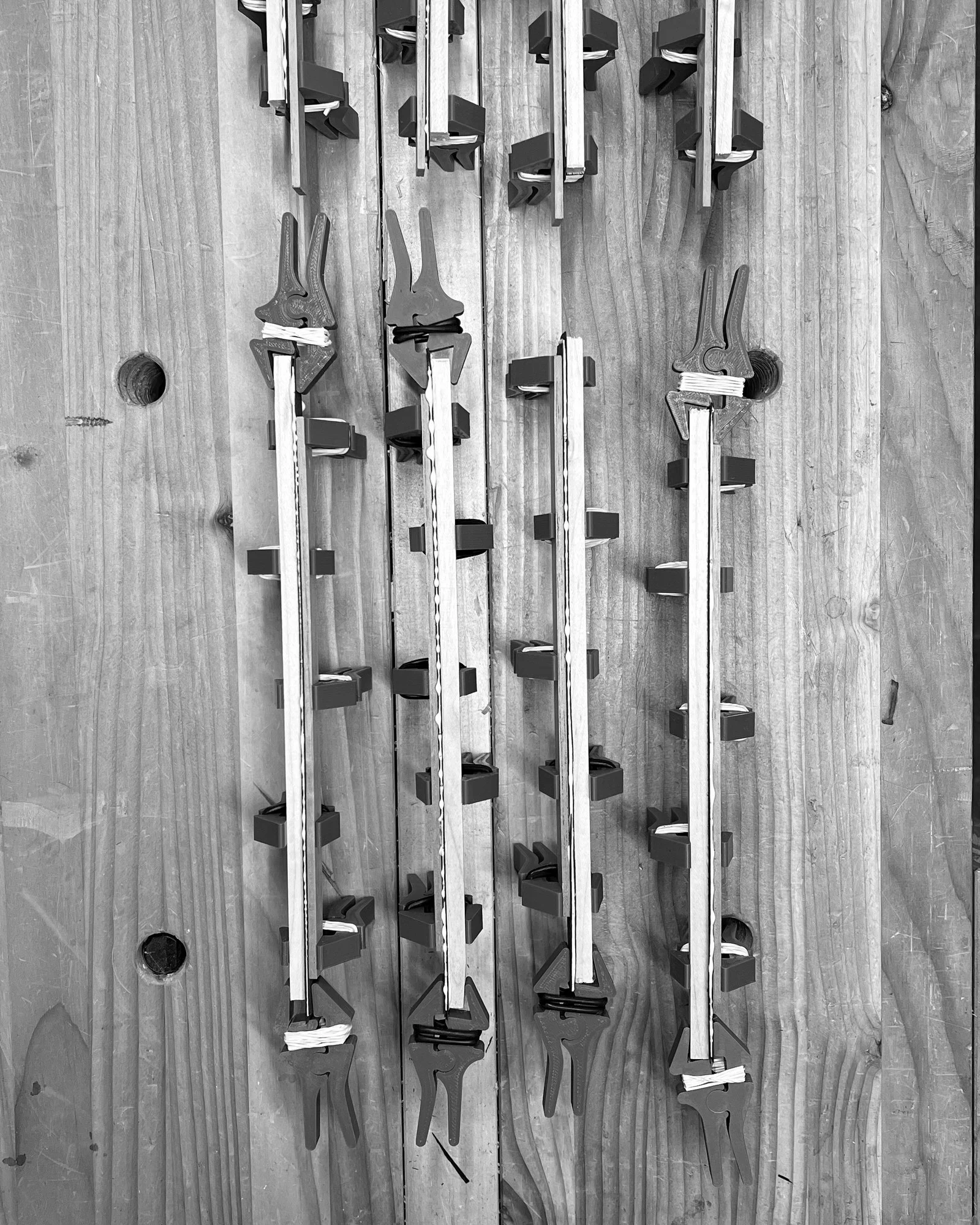
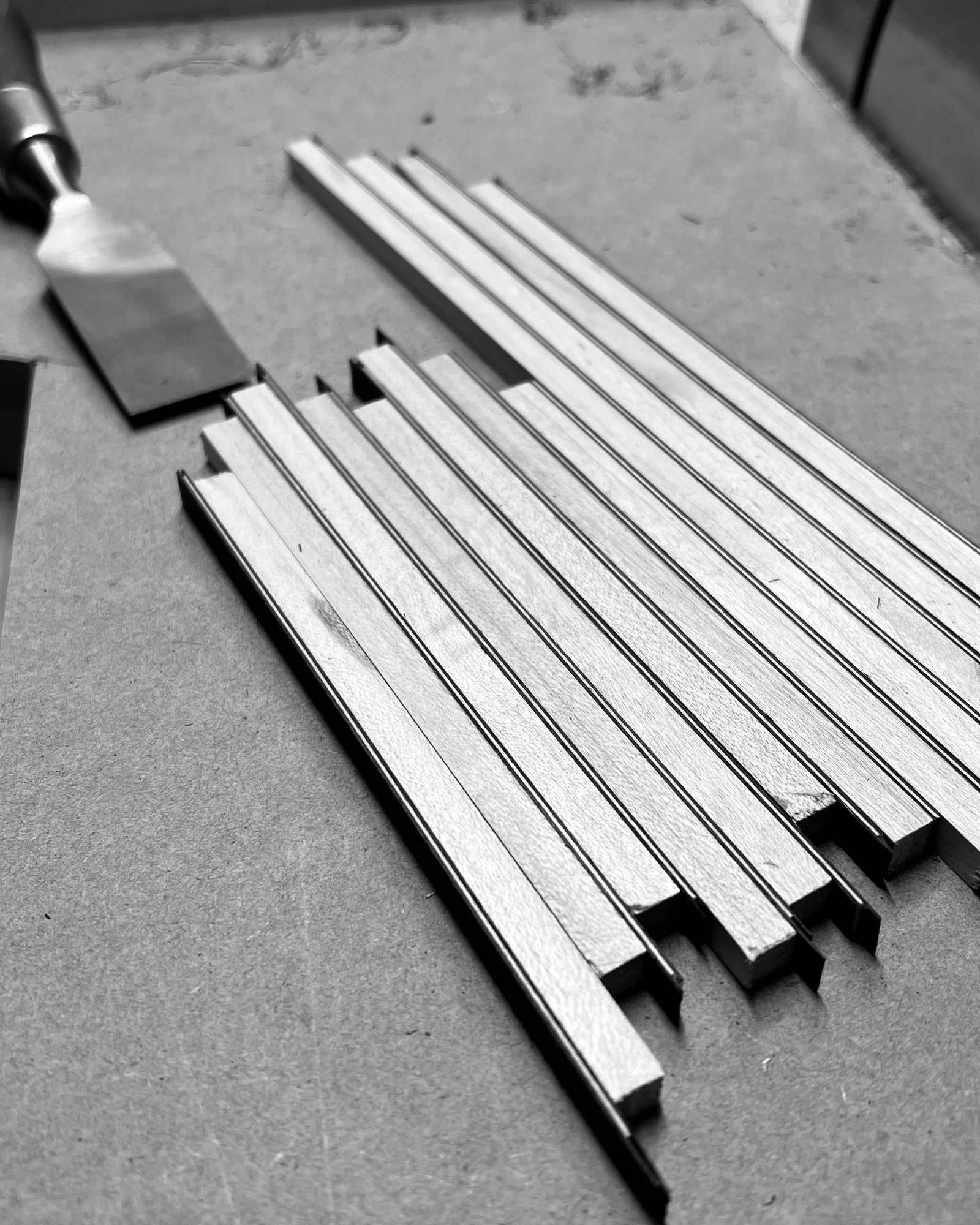
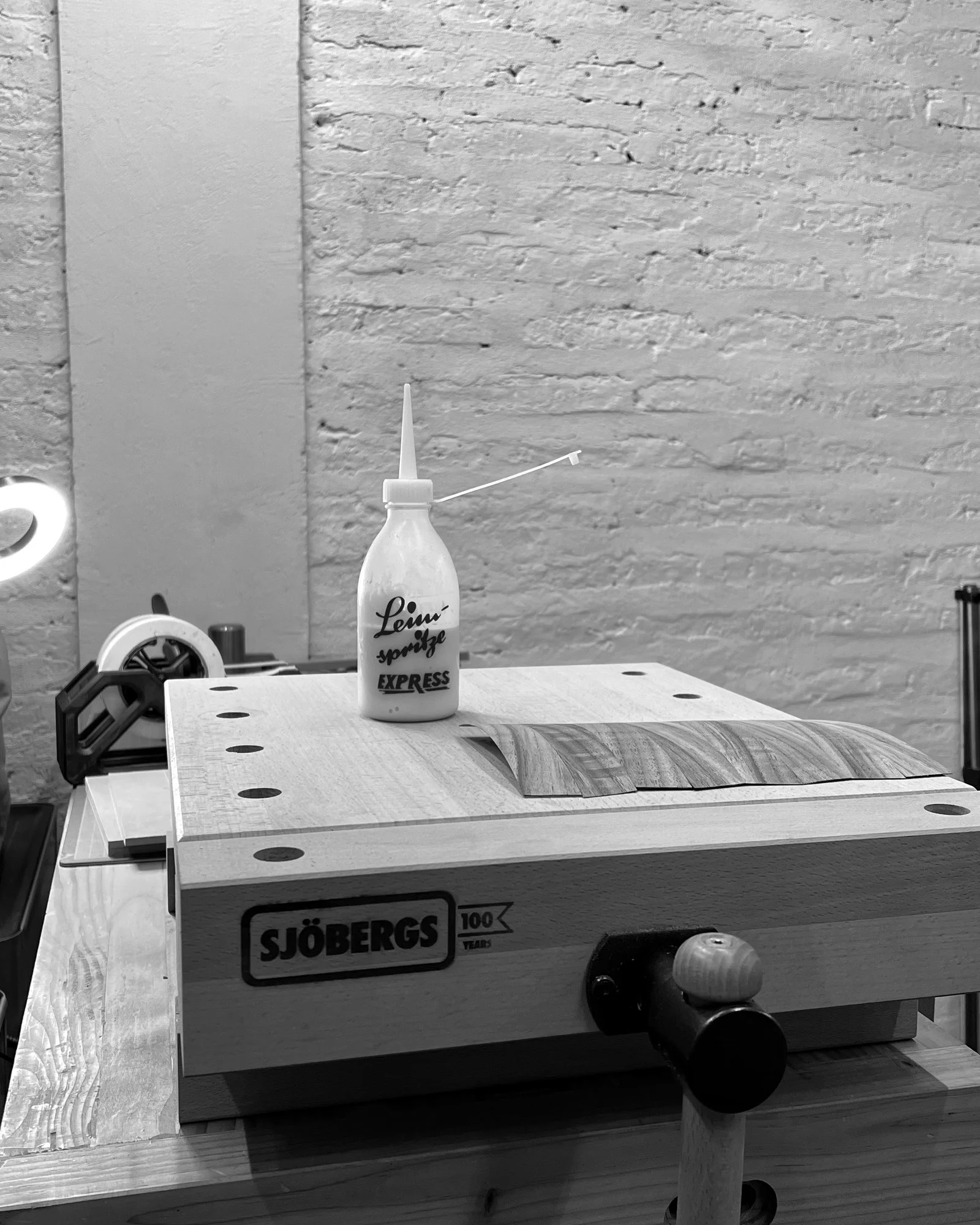
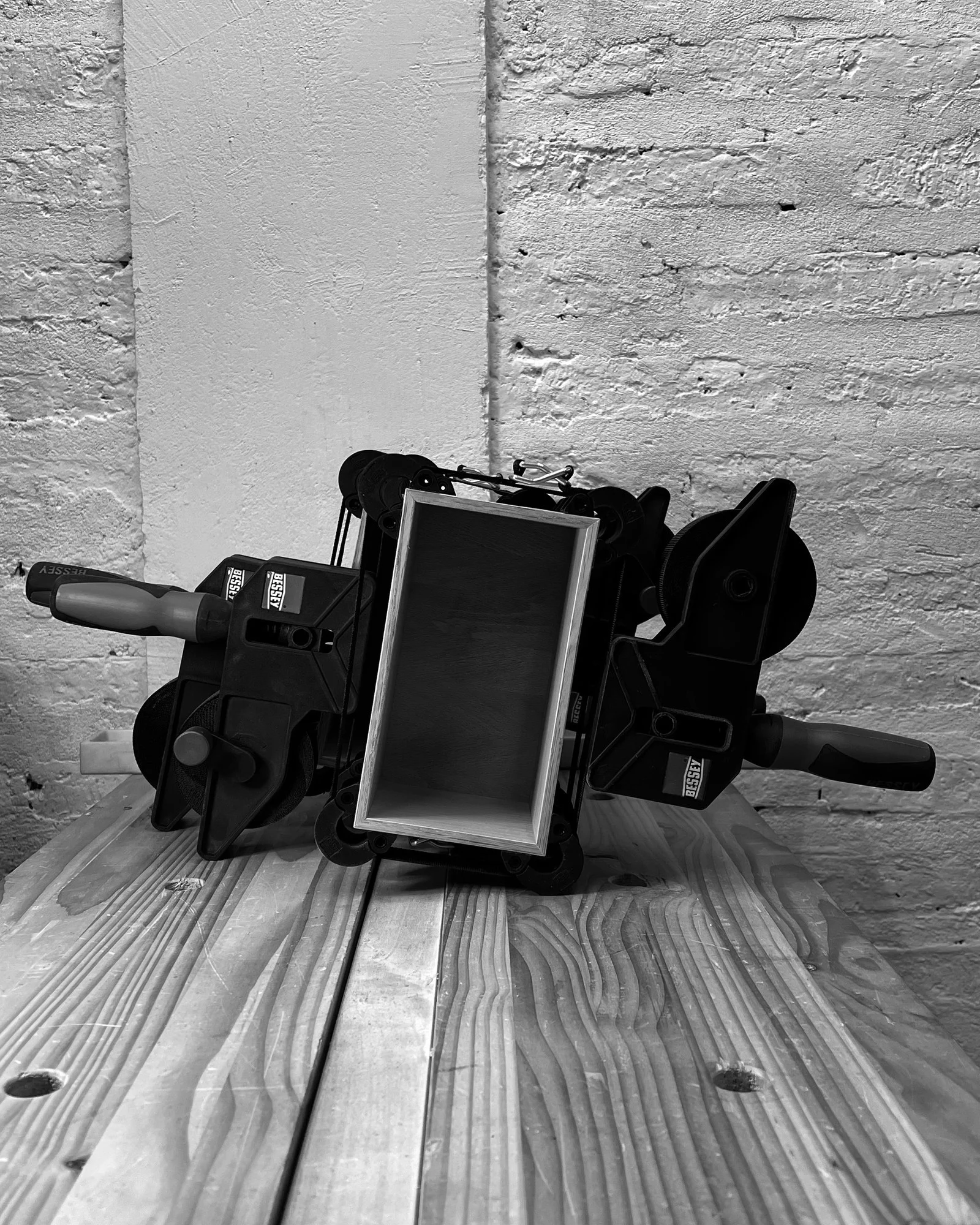
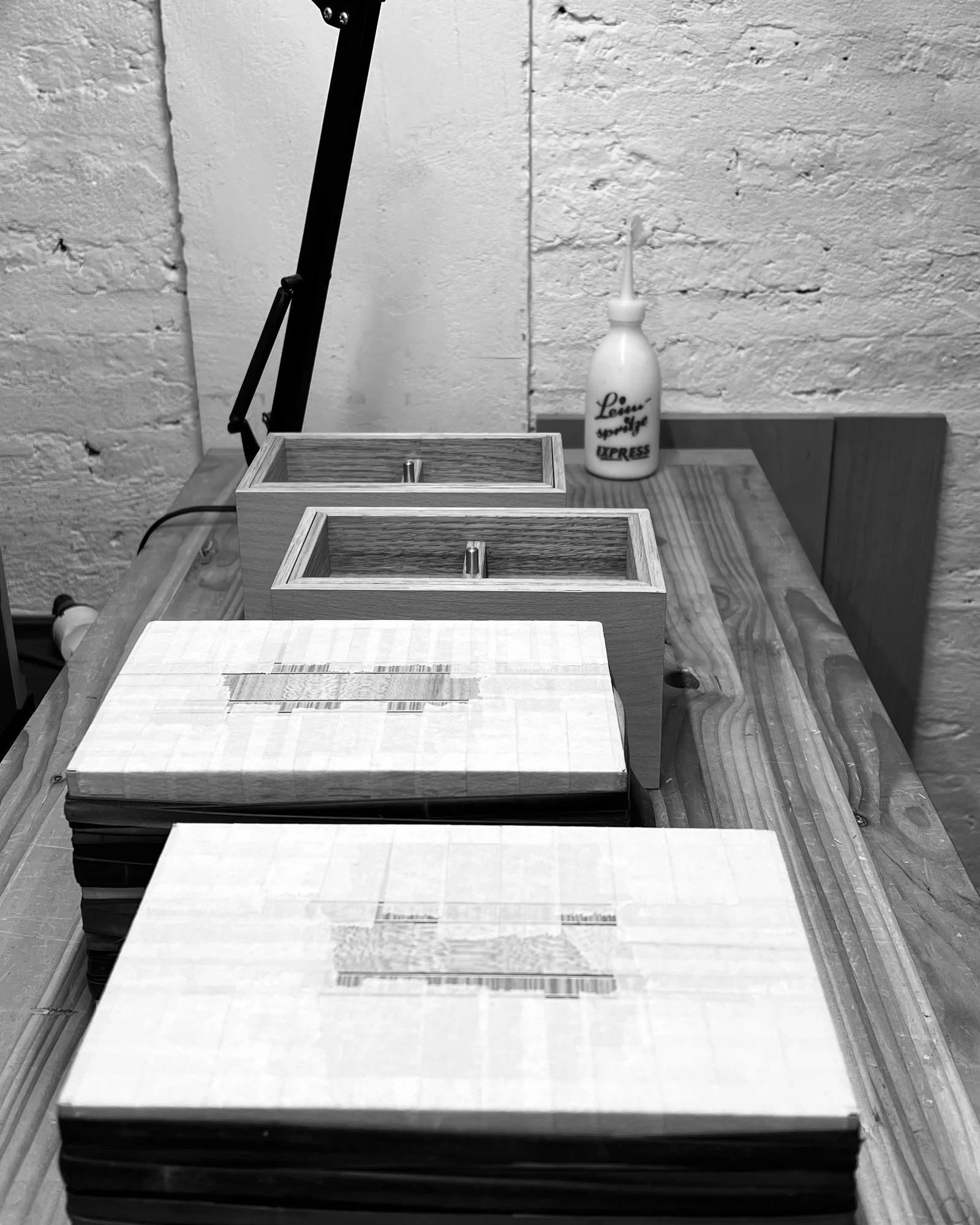
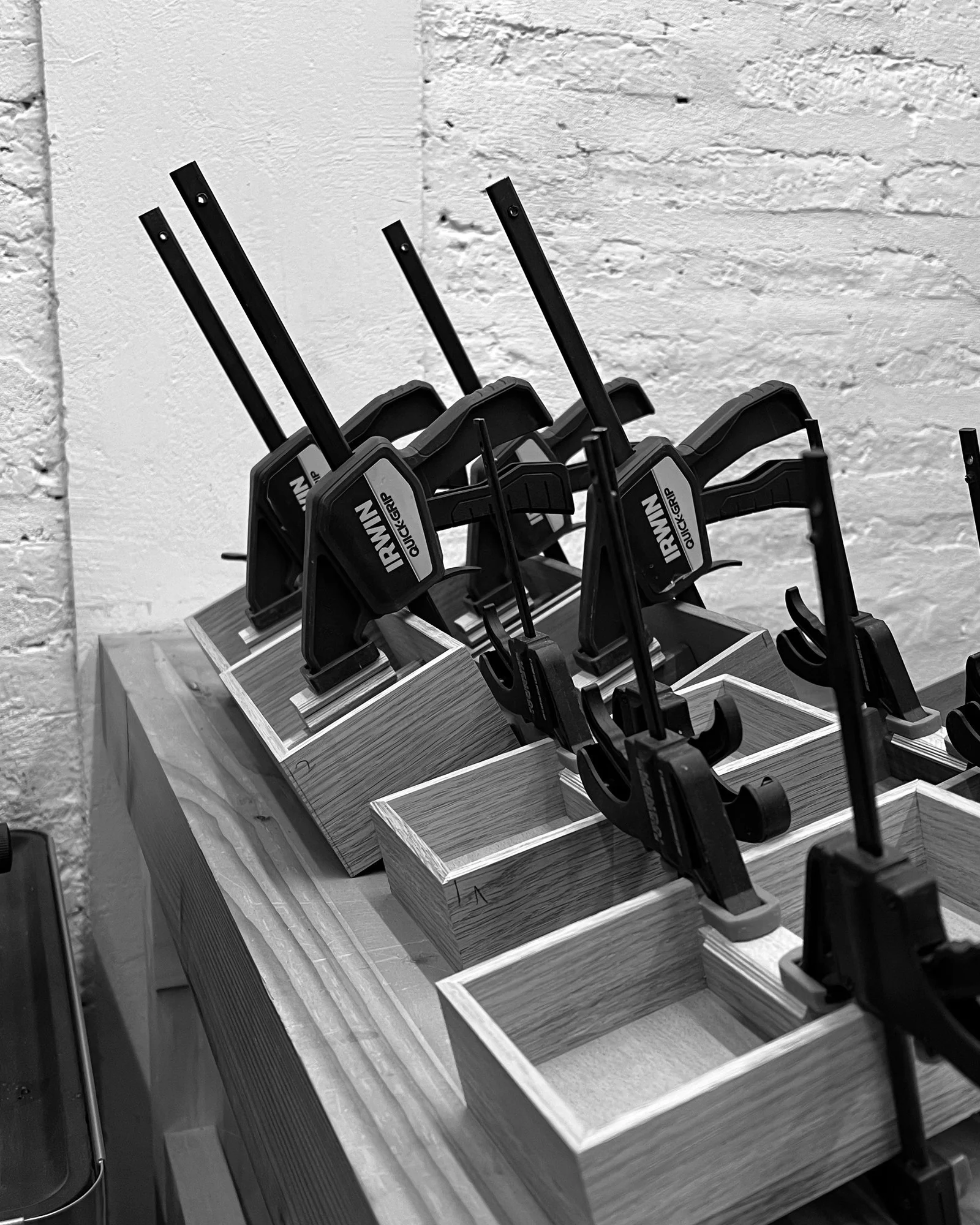
The veneer with its band of radal and marquetry, the laminated ebony and maple edge, veneering, gluing up the boxes, and fitting the trays with their pins.
Process · 1:33
Gluing and planing the marquetry on the edges.