Lenga cabinet
Cabinet on stand
Santiago/2025
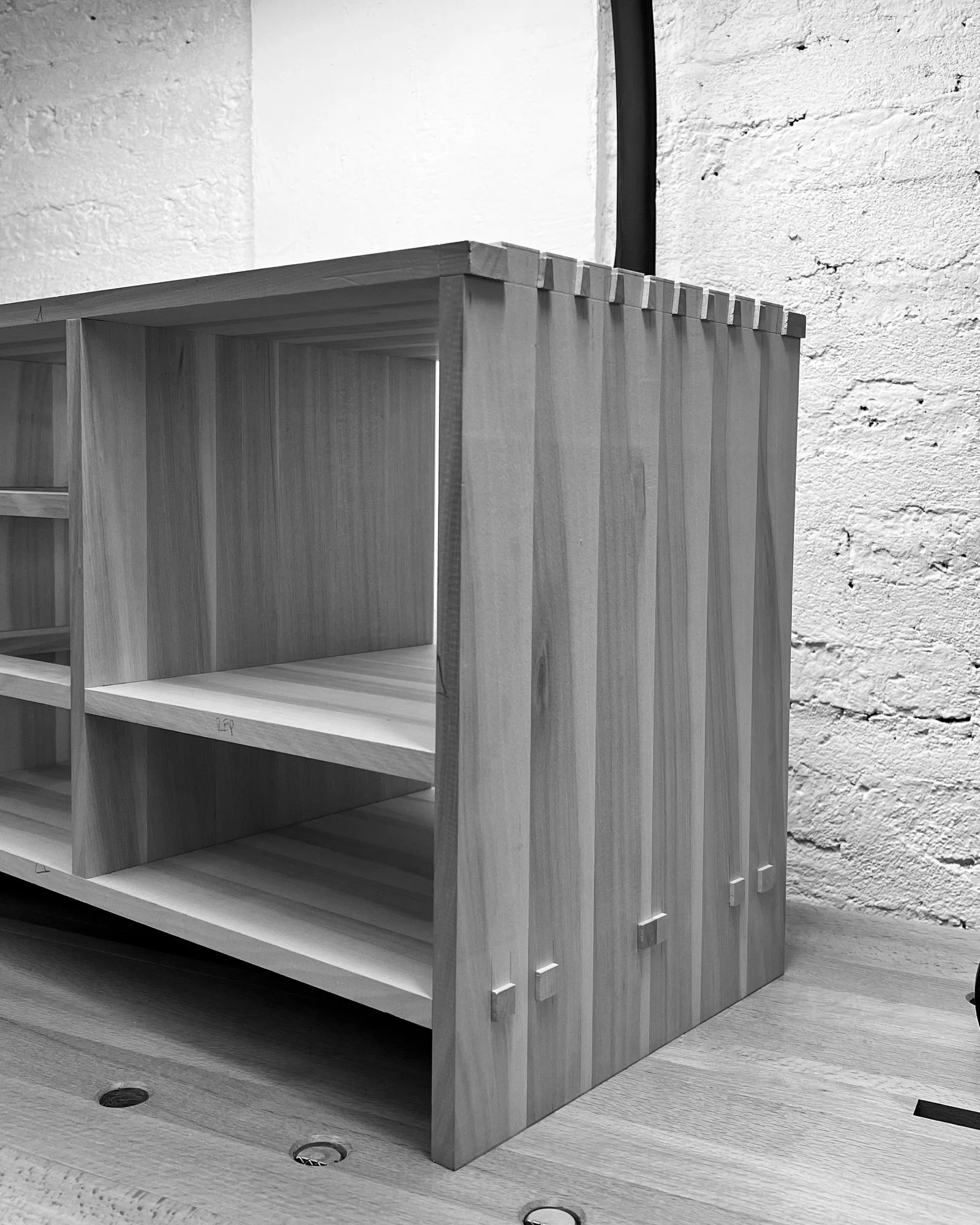
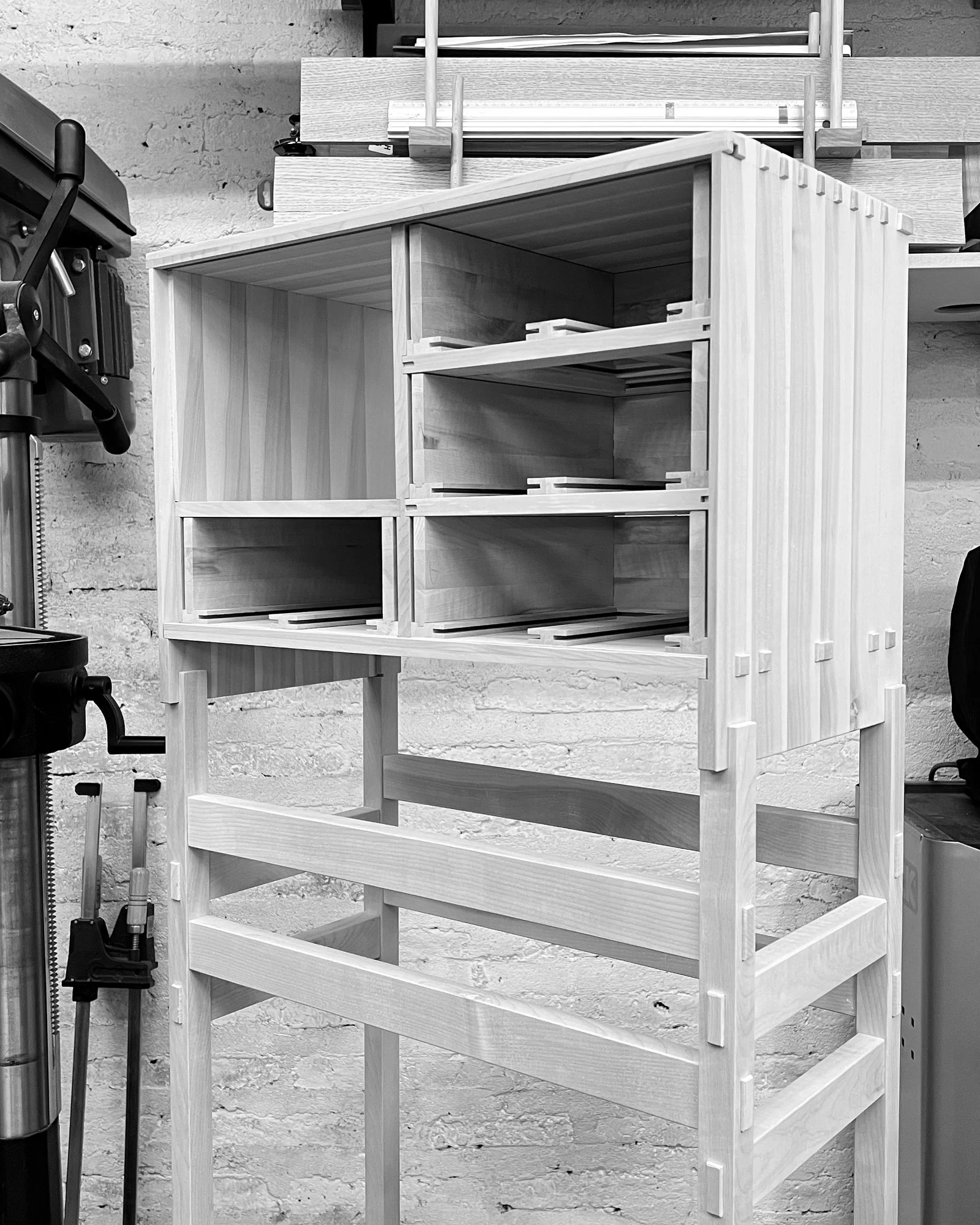
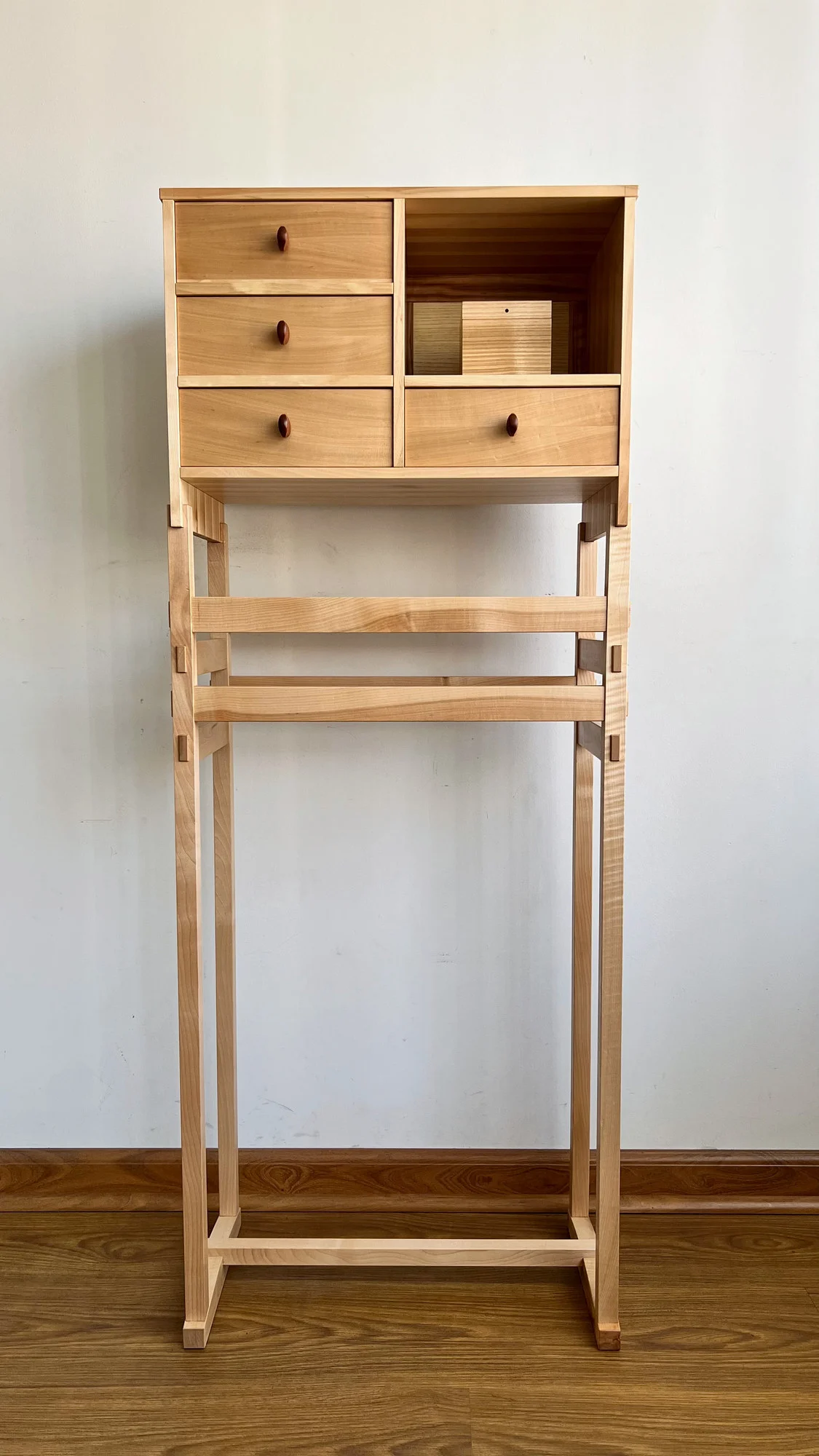
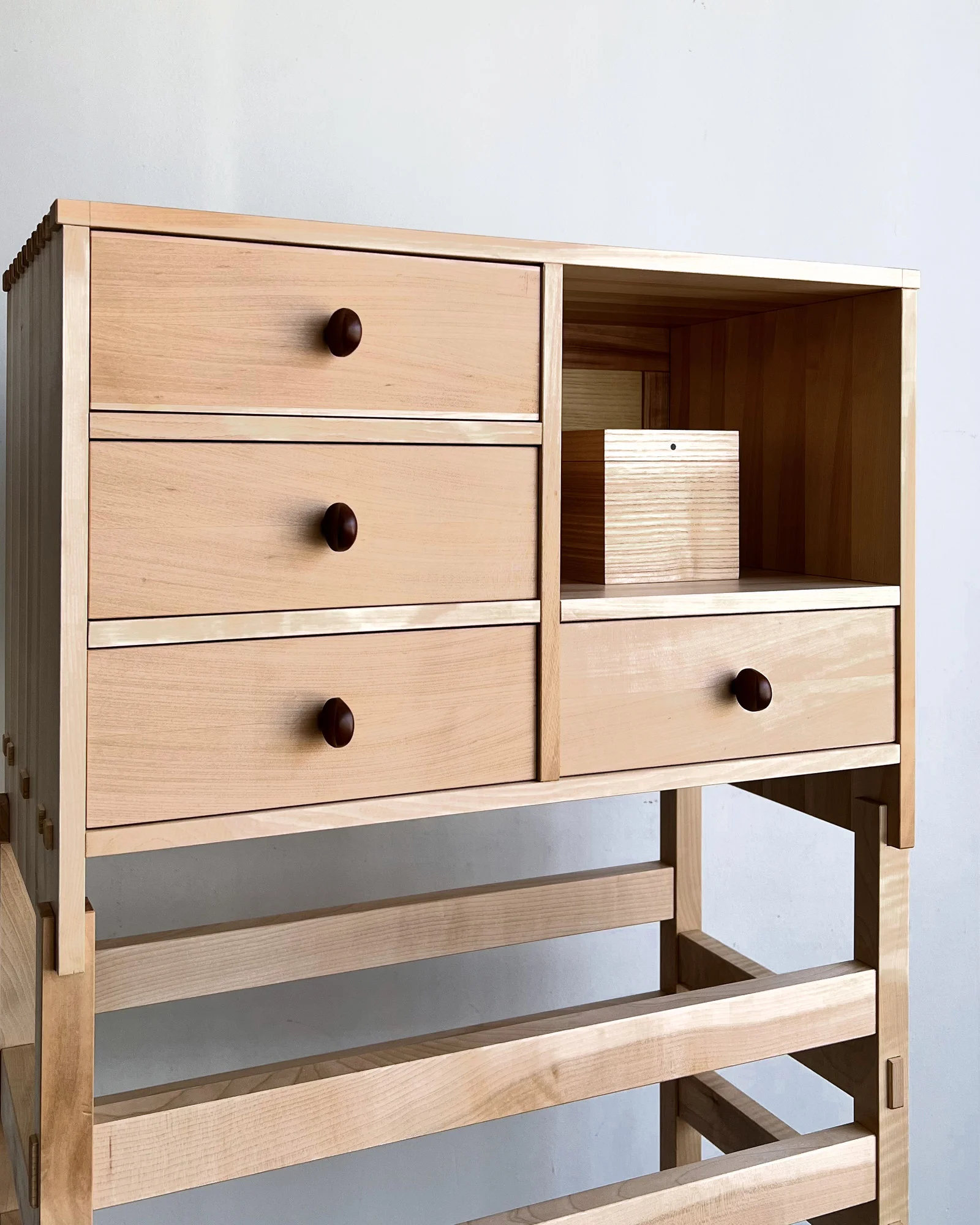
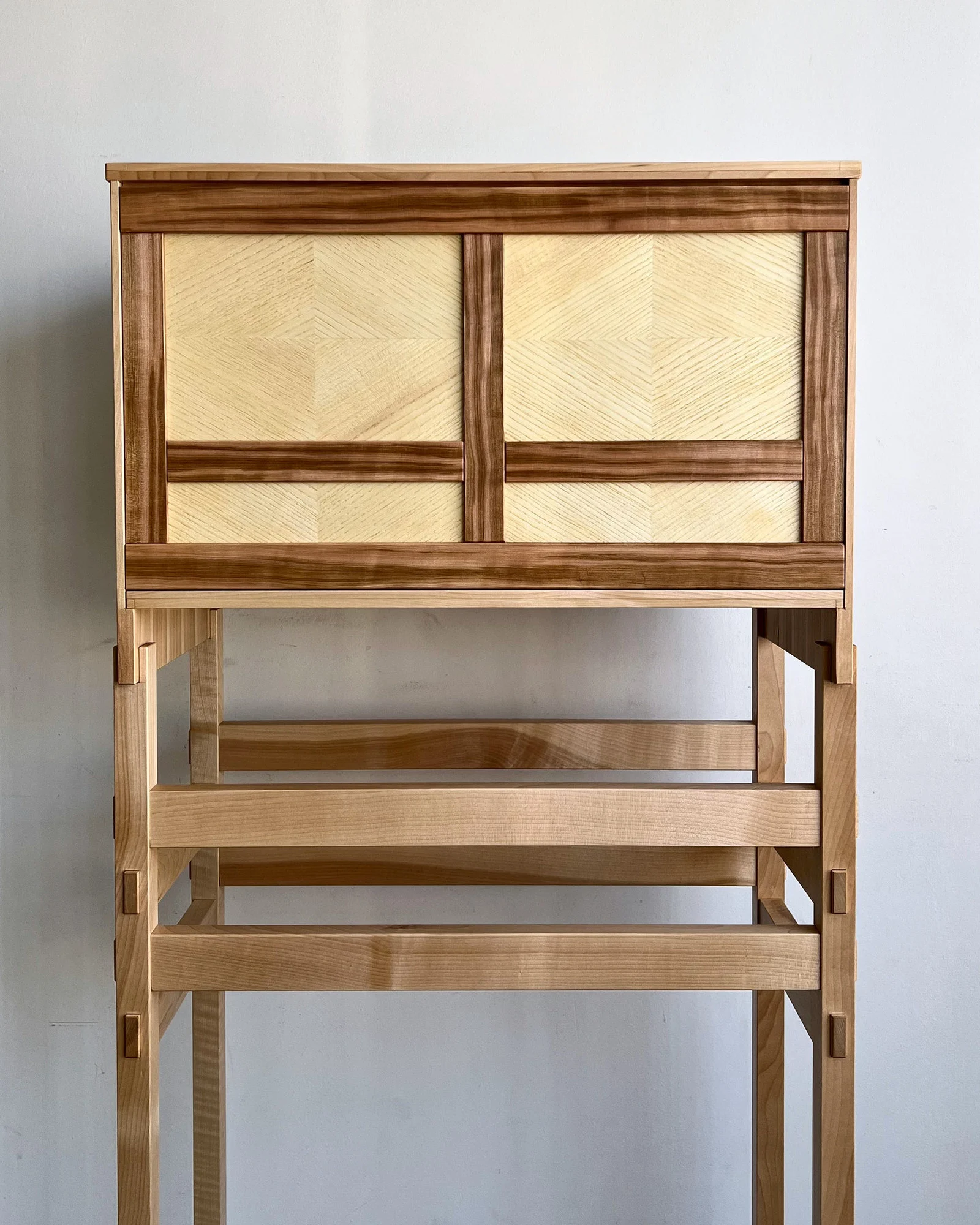
A cabinet exercise, made entirely in lenga, with marquetry and ash veneer details and boxwood pulls. It has two parts: a tall base with legs and a body of drawers that rests on it.
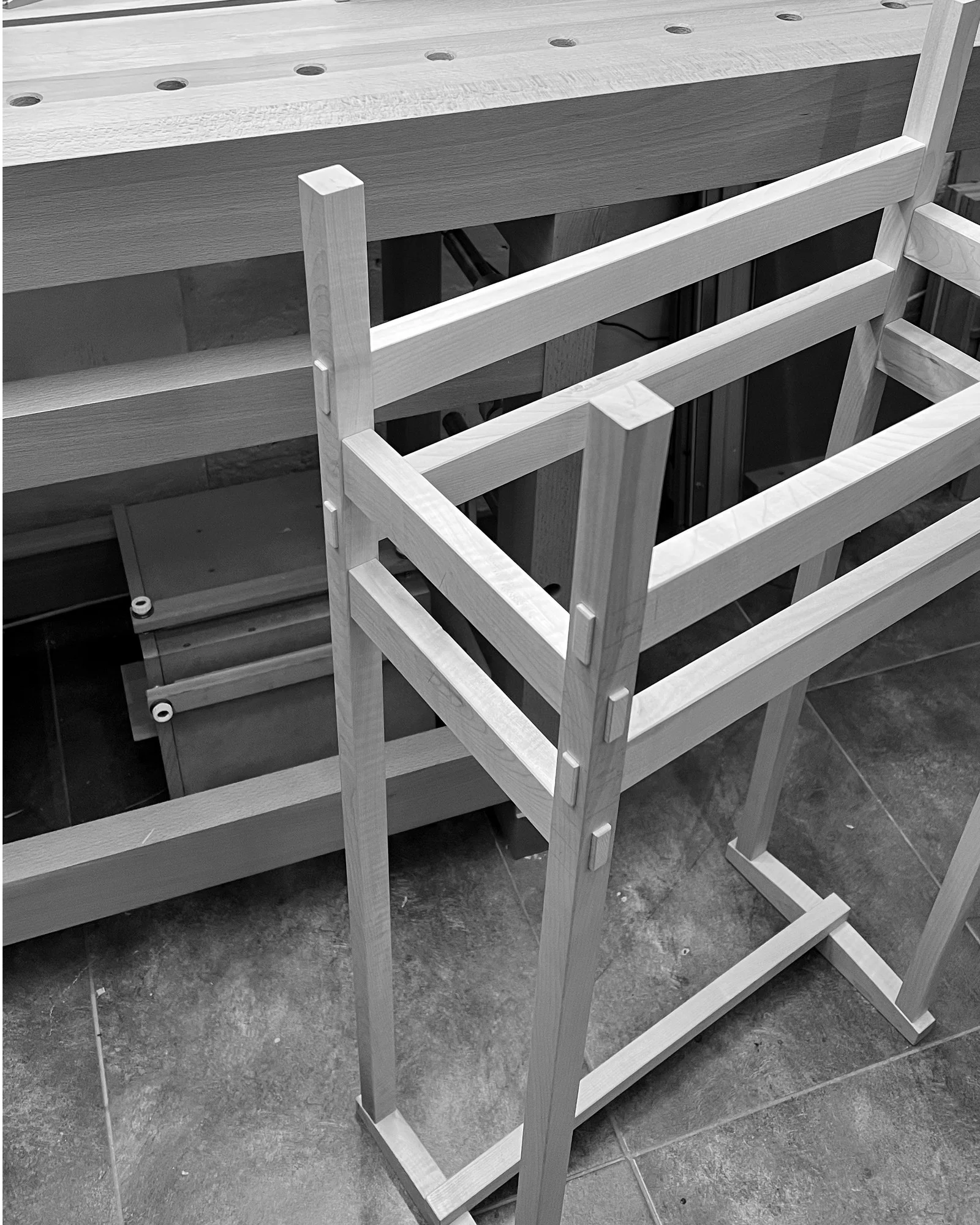
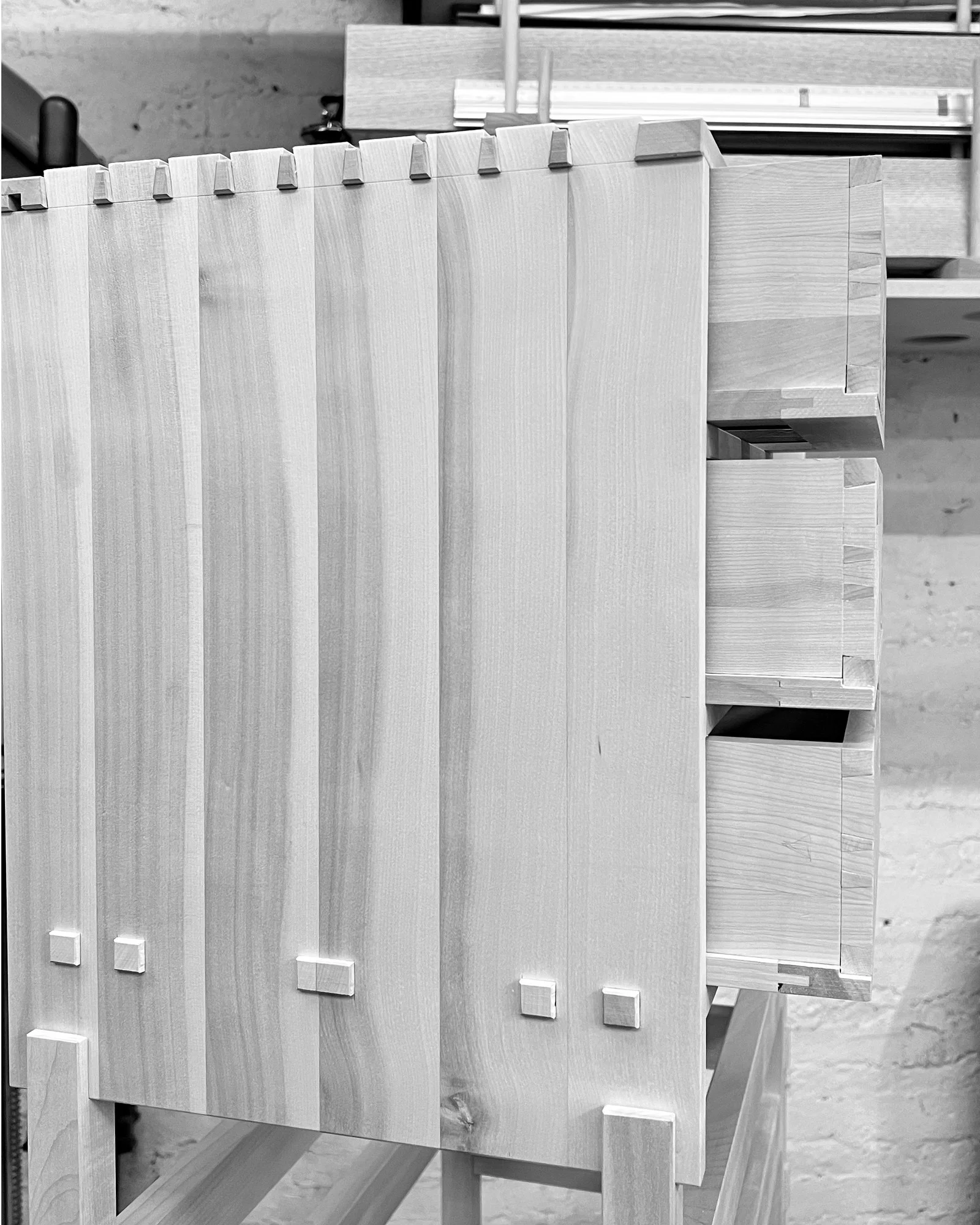
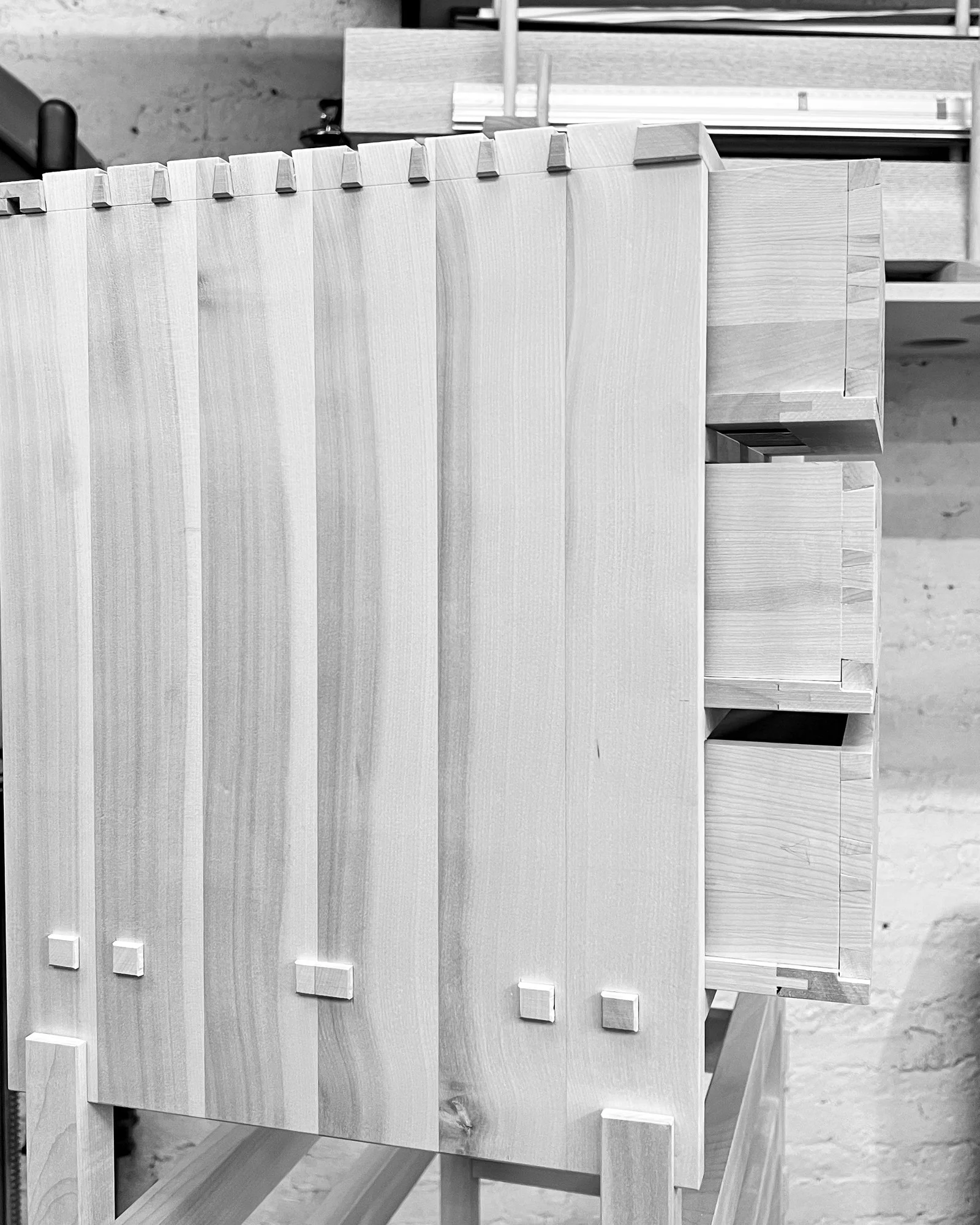
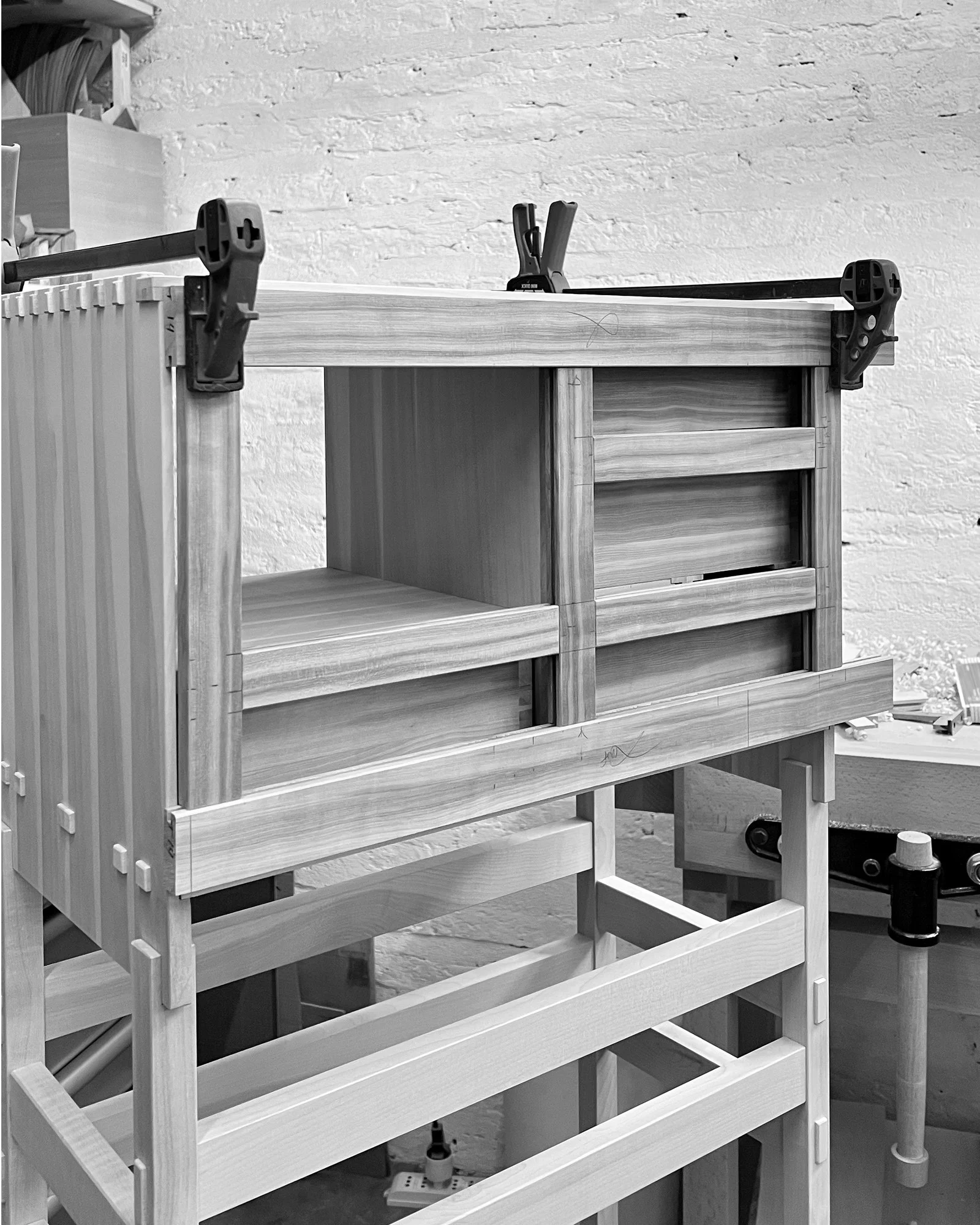
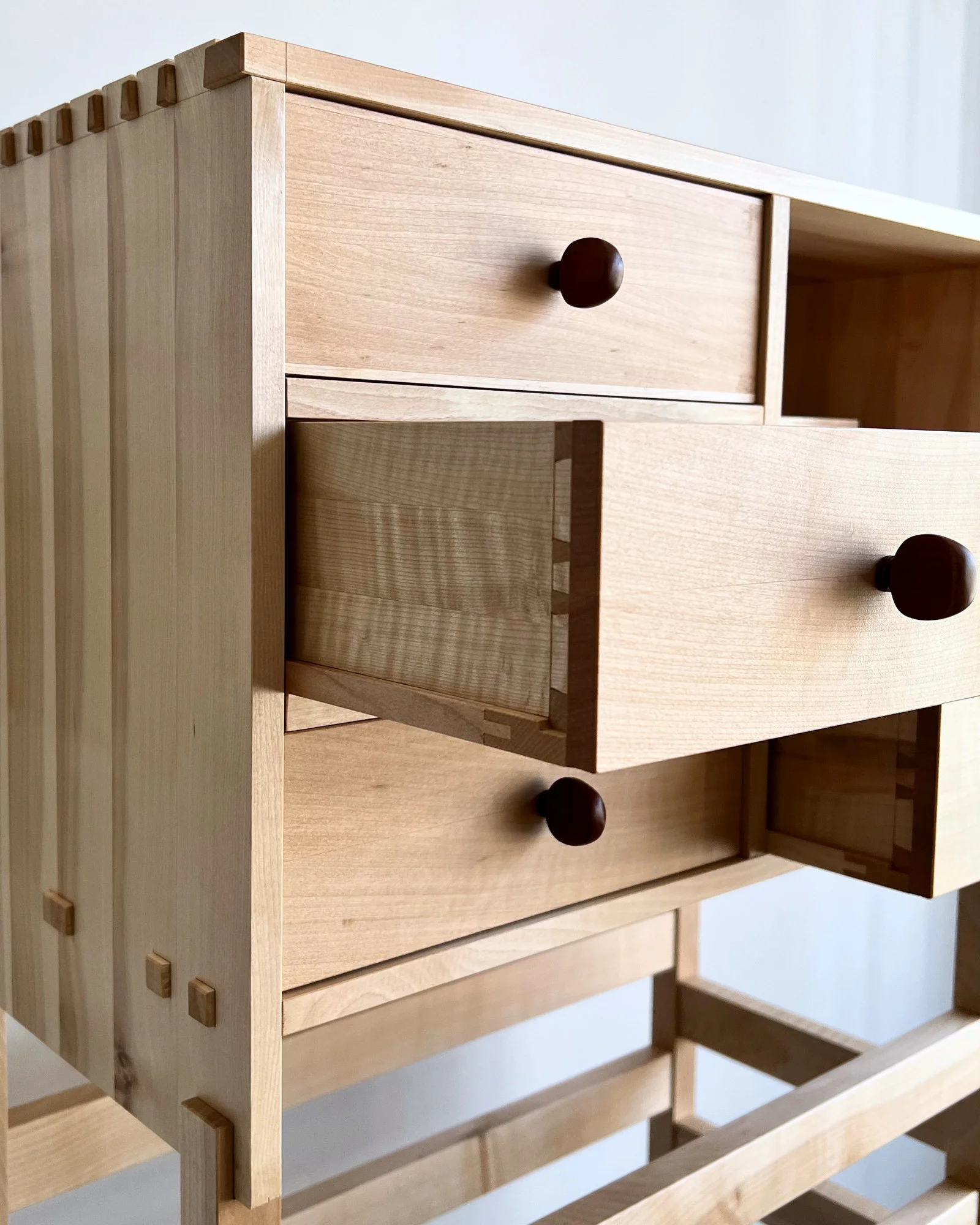
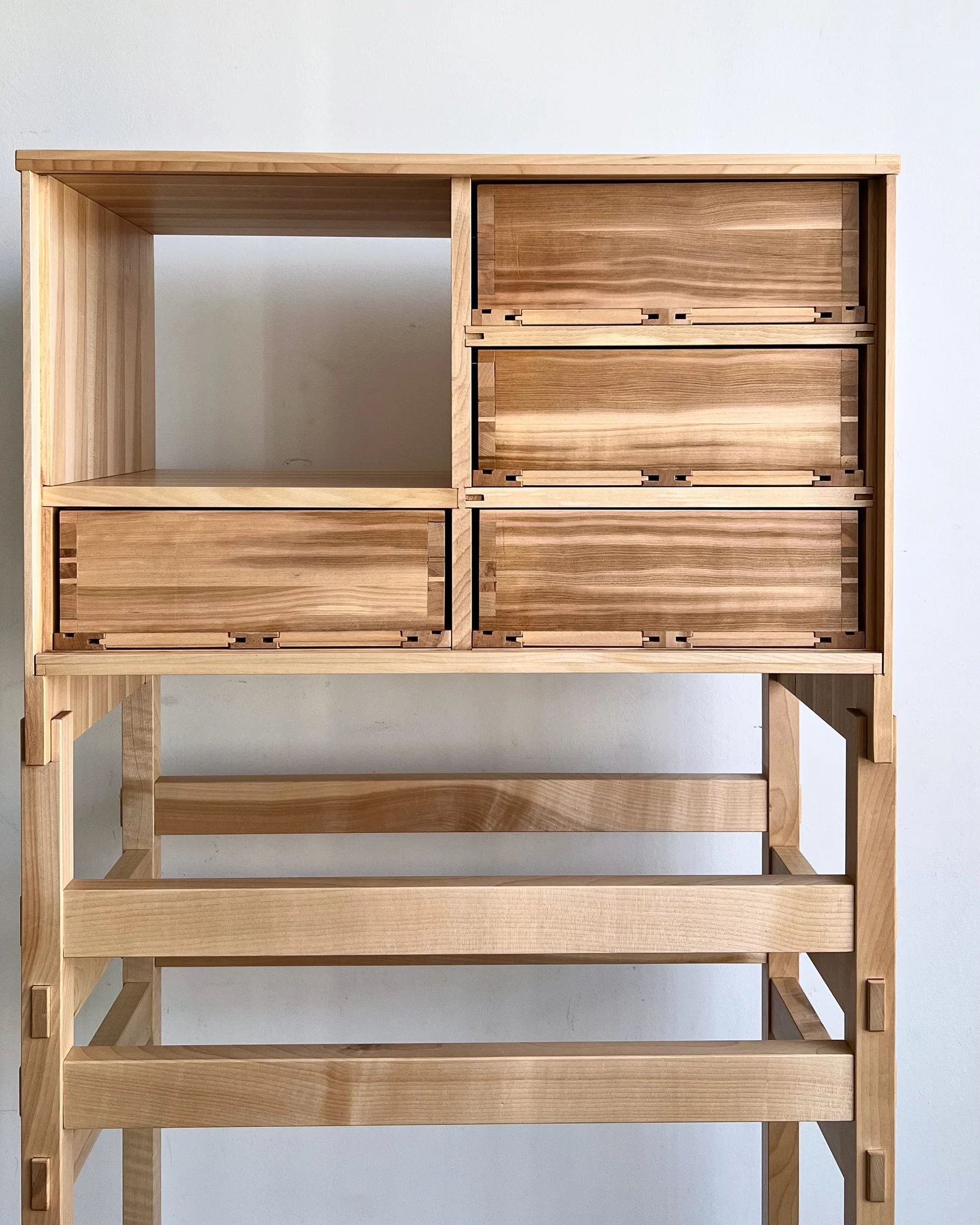
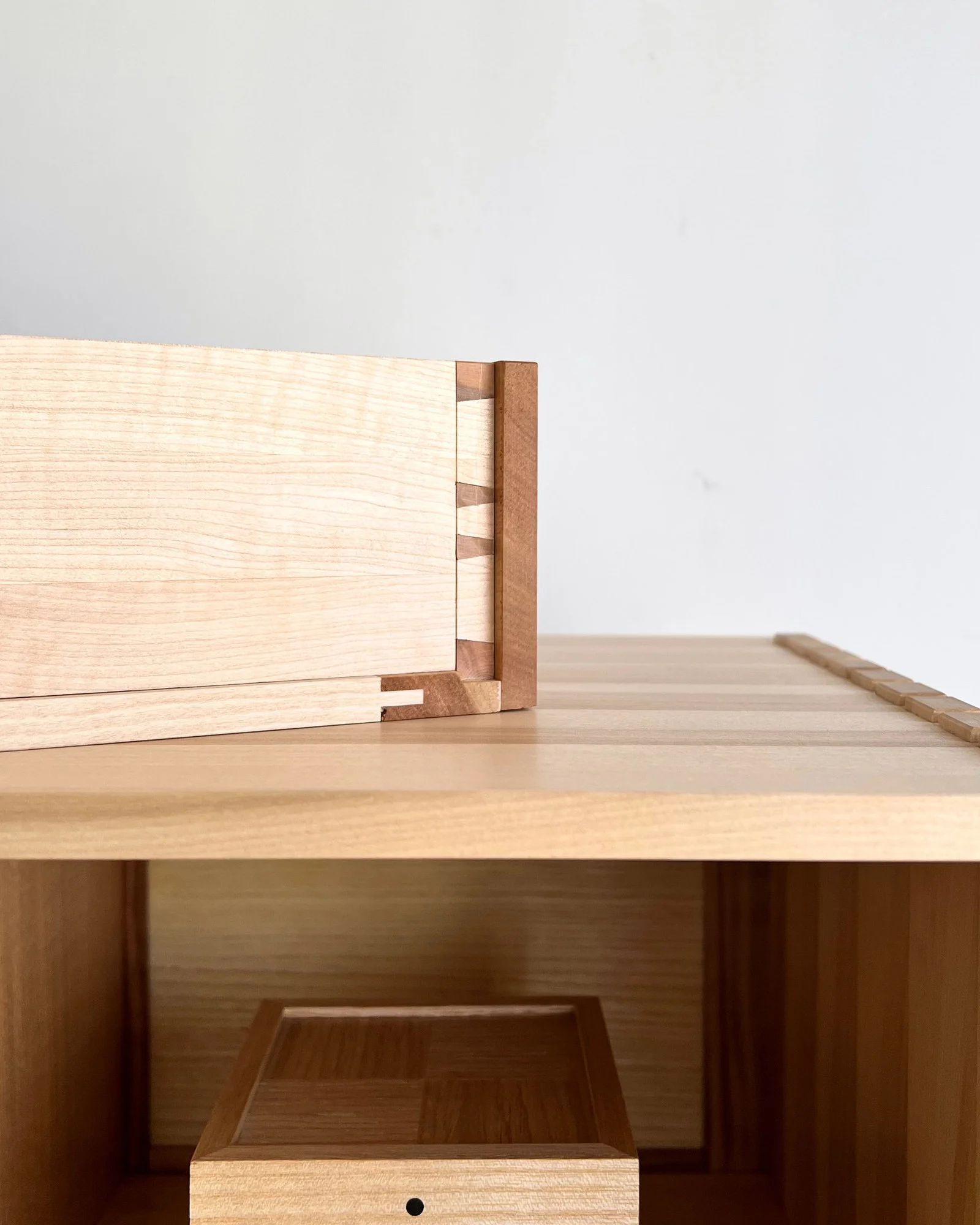
It is fully joined, with through mortise and tenons, dovetails, grooves and rabbets, in both the cabinet and its legs.
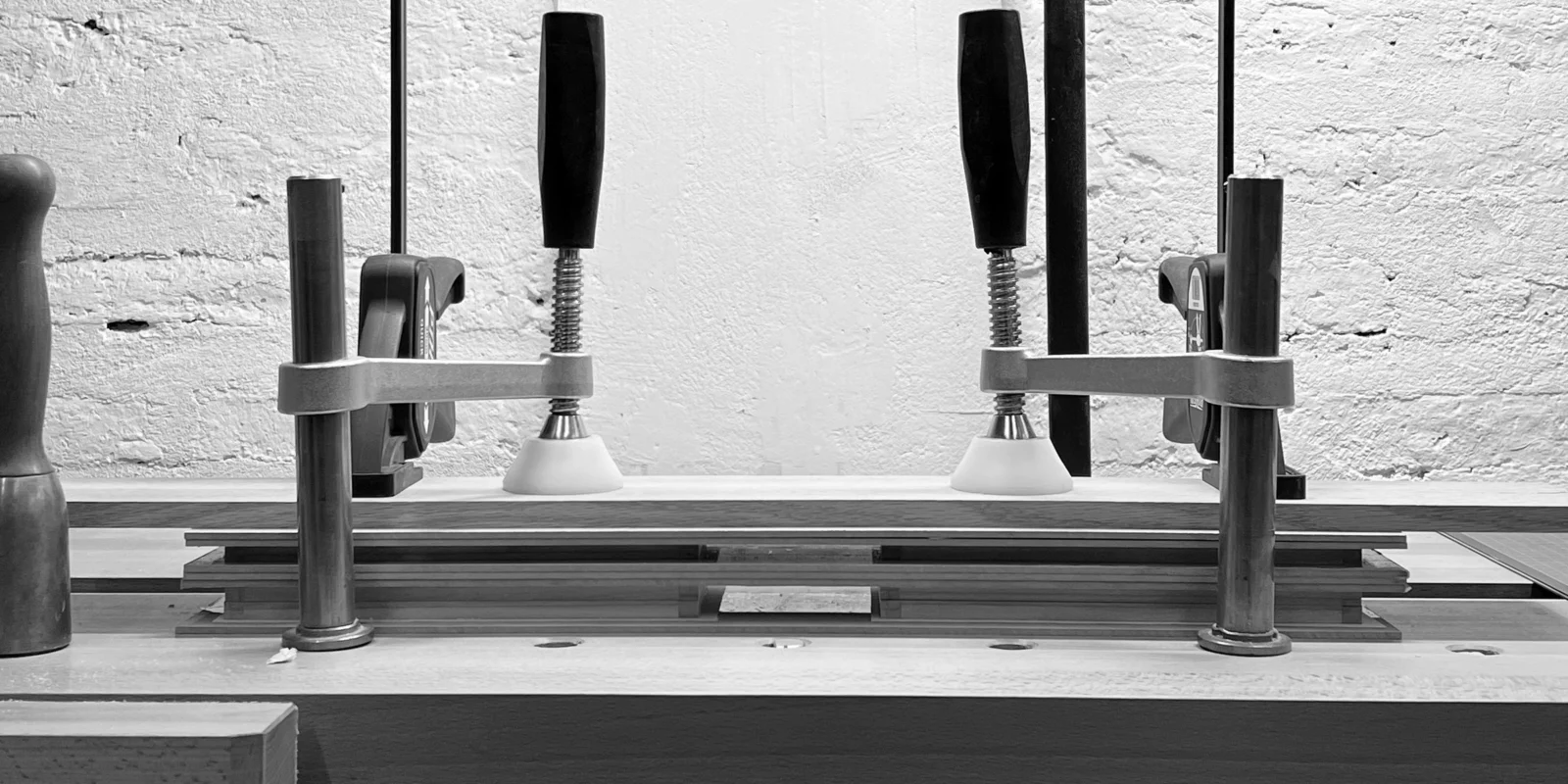
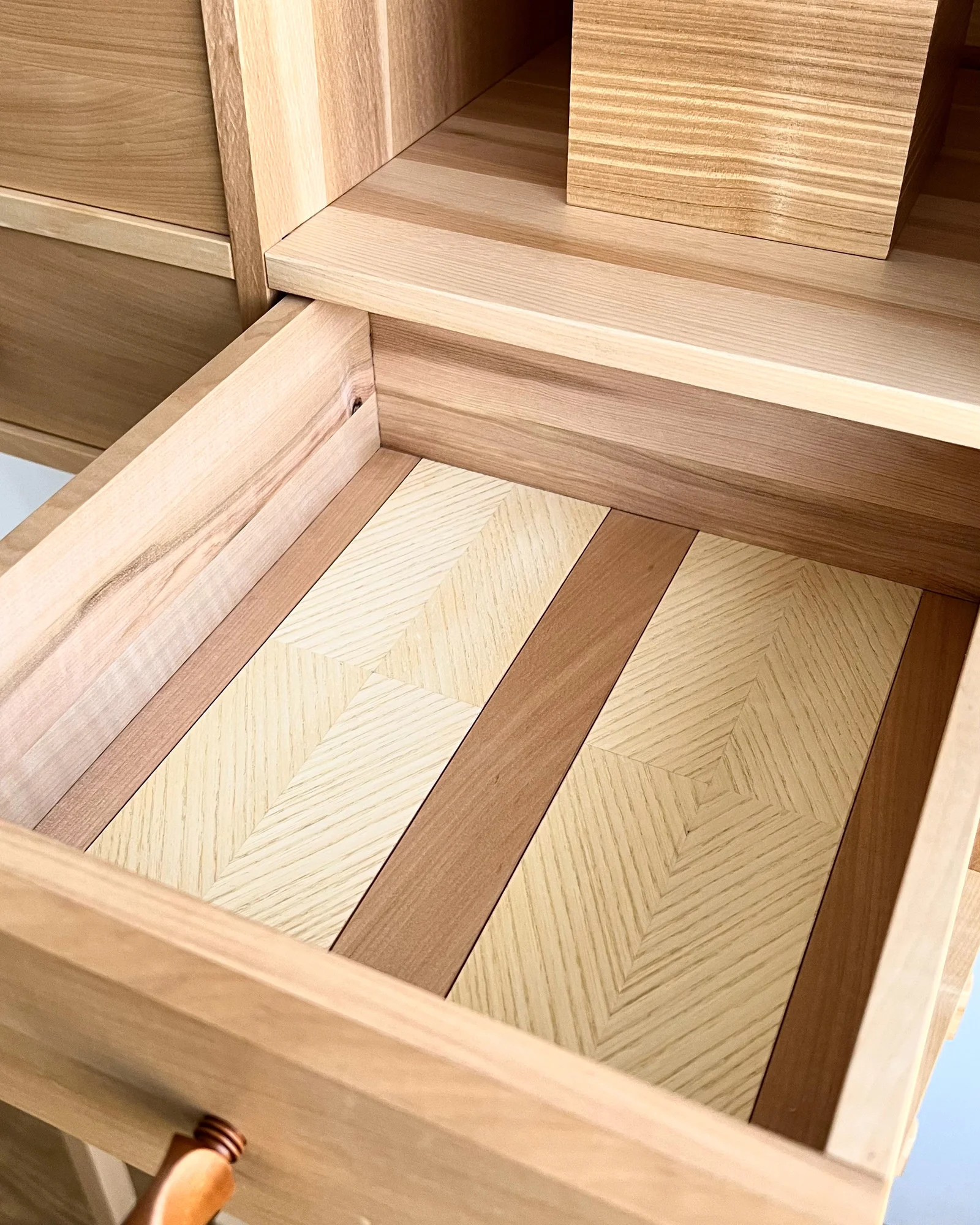
The drawers and the back took most of the work. The drawer bottoms are veneered panels with marquetry, and the back frame, in ash veneer, keeps the same diamond pattern.
The lenga showed all of its versions: browns, pinks, ochres, some figured boards and very dark strips. A single species showing very beautiful character across a wide range of tones.
The pulls are boxwood violin pegs, an idea seen in a piece by Germán Peraire.
The finish is Osmo #3032 satin hardwax oil, which shows all the character of the wood and brings out above all the figure and the polished end grain of the pins and tails.
One of the less visible details are the stops that keep the drawers from coming all the way out and falling. They don’t need to be touched to put the drawer in, and to remove it you only need to press them. They are made from an ebony strip and sit loose in a recess, with a spring and a screw, a common solution in James Krenov’s furniture.
- Materials
- Lenga (Nothofagus pumilio) · marquetry and ash veneer · boxwood pulls (violin pegs) · ebony stops
- Technique
- Dovetails, through tenons, bridle joints, grooves and rabbets · quartersawn panels · frame-built drawers and runners · legs with through tenons and a half-lap stretcher · marquetry on the drawer bottoms and back panel
- Finish
- Osmo #3032 hardwax oil, satin
- Dimensions
- 500 × 270 × 1400 mm (width × depth × height)
- Edition
- One of a kind



Process
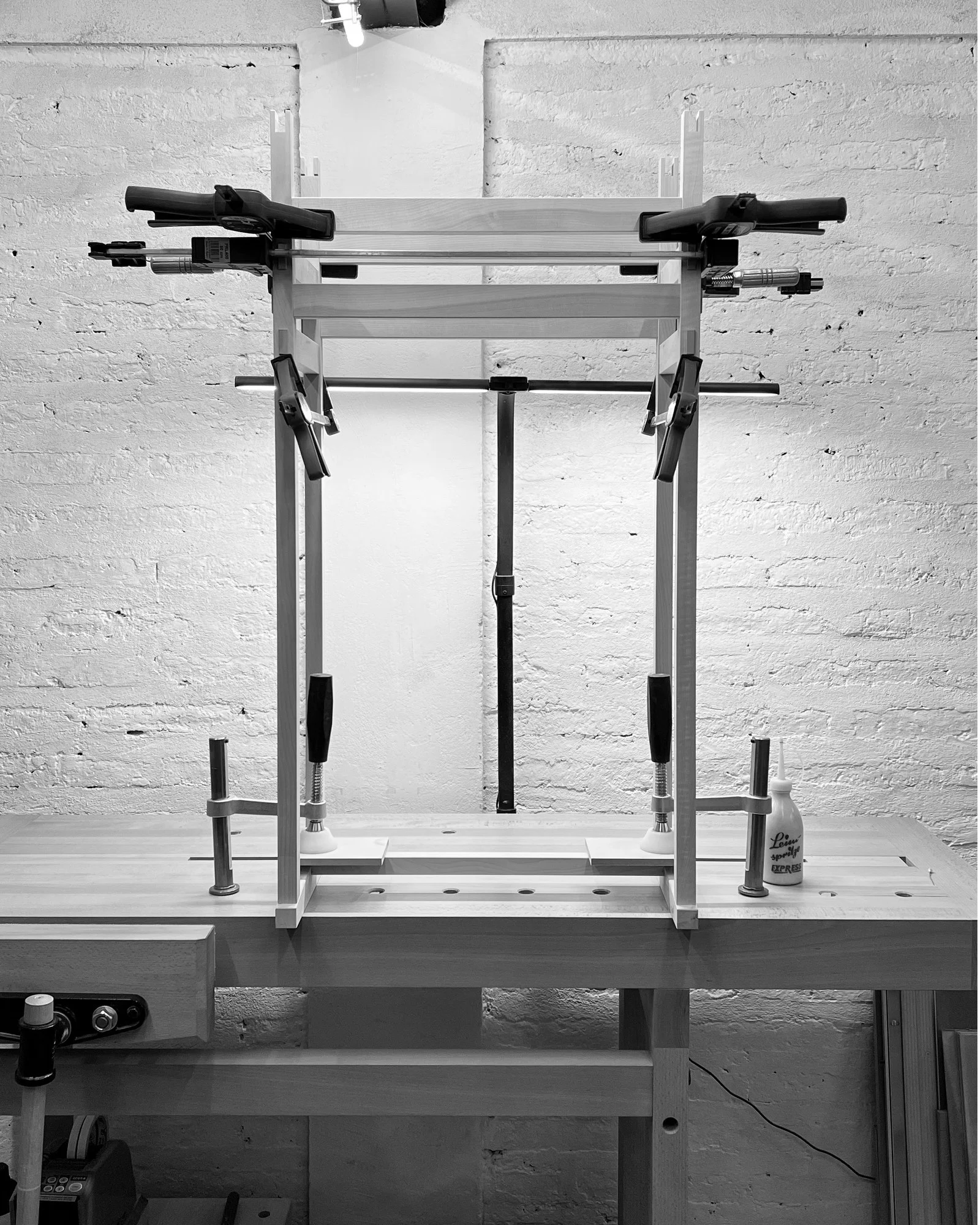
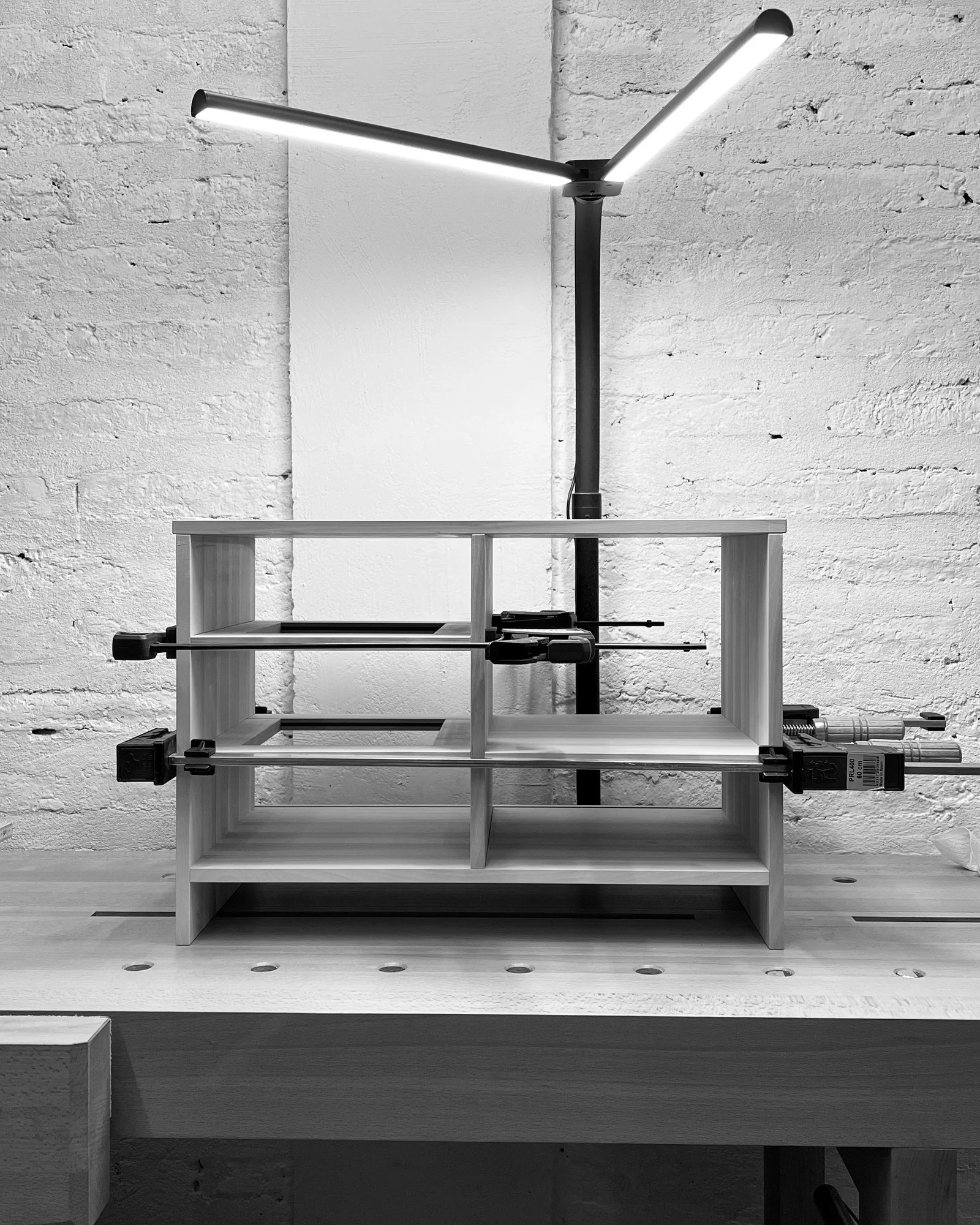
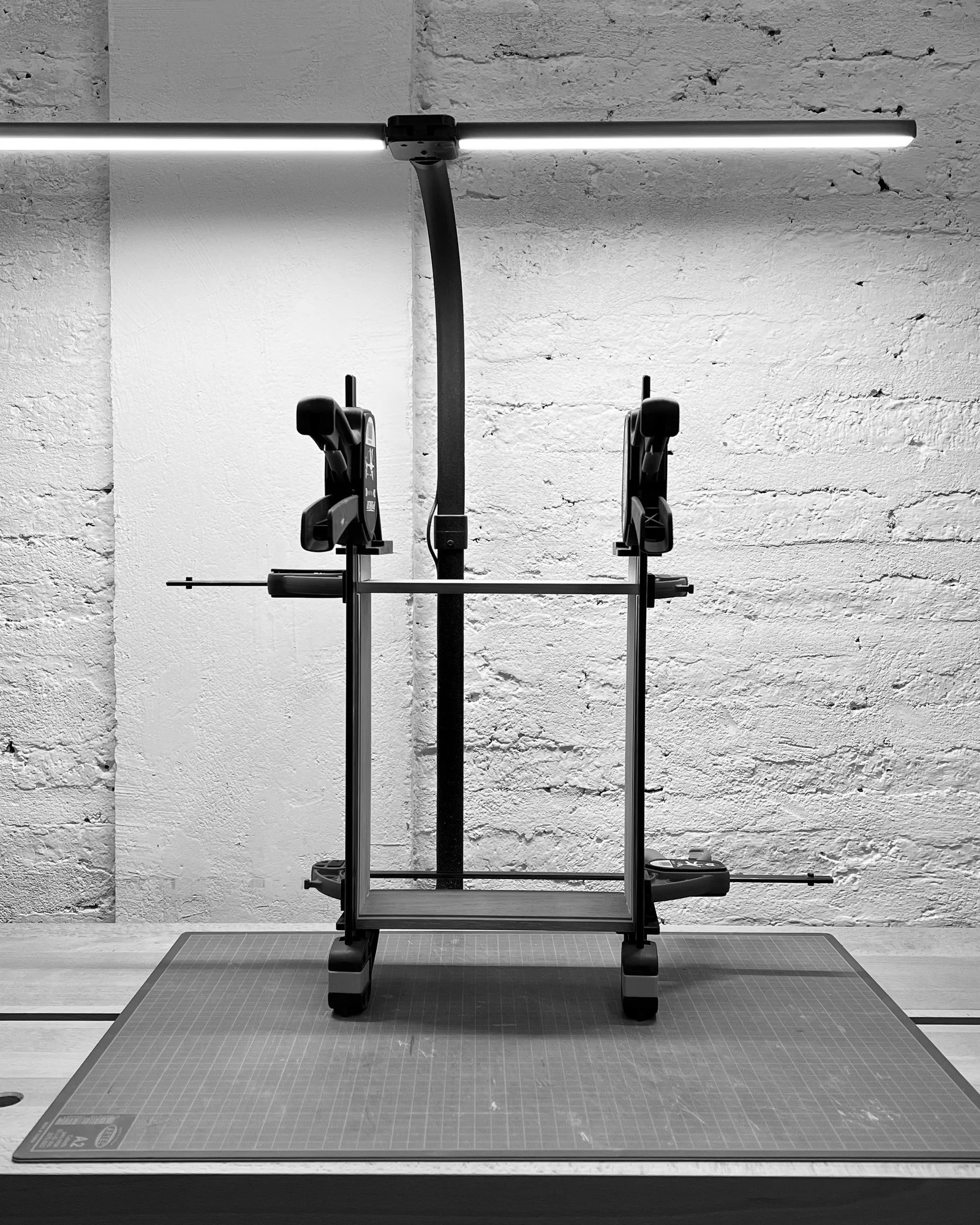
Dry fitting and gluing up the base, veneering the panels, the body with its dovetails and through tenons, and the body on the base, with its drawers in place.